
Is a laminate the same as a veneer?
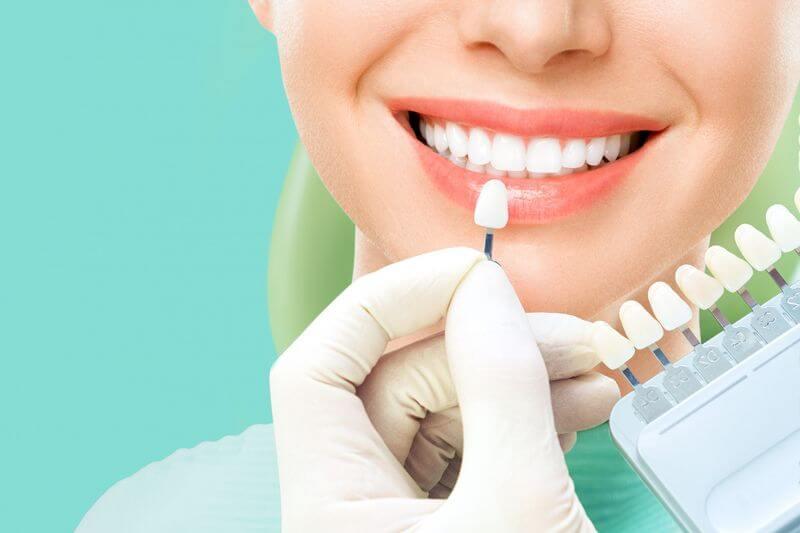
Yes. A laminate veneer is a veneer: a thin shell bonded to the front of a tooth. "Porcelain laminate" means a ceramic veneer; veneers can also be made of composite resin. In Turkish a ceramic veneer is called lamina or yaprak porselen. There is no separate treatment called a "laminate" that differs from a veneer.
The real confusion is between a veneer and a crown. In Turkish, both are commonly called kaplama ("covering"), and plans written in English sometimes call a crown a "zirconium veneer" or a "porcelain veneer". A crown covers the whole tooth and removes much more of it than a veneer, and neither can be reversed1. So when a plan says "veneer", ask whether it covers only the front of the tooth or the whole tooth.
- A laminate veneer is a veneer: a thin shell bonded to the front of a tooth, usually ceramic, sometimes composite.
- The Turkish word "kaplama", and some English plans, use "veneer" for crowns too.
- A crown covers the whole tooth and removes far more of it; ask which one each tooth in your plan will get.
- A material name such as e.max or zirconia does not tell you whether it is a veneer or a crown.
| What it usually means | What it covers | |
|---|---|---|
| Laminate veneer, porcelain laminate, lamina, yaprak porselen | A veneer | The front of the tooth, and the biting edge where needed |
| Porcelain veneer, ceramic veneer | Usually a veneer; check, as some plans use it for a crown | Front only if it is a veneer |
| e.max veneer, e.max kaplama | A brand name, usually for lithium disilicate ceramic, made as a veneer or as a crown | Depends on which; ask |
| Zirconium veneer, zirkonyum kaplama | Either a zirconia crown or a zirconia veneer; ask which | The whole tooth if it is a crown |
| Porcelain-fused-to-metal veneer, metal destekli porselen kaplama | A metal-ceramic crown | The whole tooth |
| Composite veneer, bonding | Tooth-coloured resin shaped on the tooth | The front, or only the part being repaired |
| Crown, kron, kaplama | A crown | The whole tooth |
Why the words matter
A veneer and a crown are prepared very differently. For a veneer, usually only a thin layer of enamel is taken from the front of the tooth, though on some teeth the preparation reaches the dentine. For a crown, the tooth is reduced on every surface, often into the dentine beneath the enamel. That difference has consequences.
- For the nerve. In pooled studies of teeth that were alive before they received crowns or similar restorations, the nerve lost its vitality in about 5 in 1002, on low-certainty evidence. The tooth then needs root canal treatment to be kept. The figure pools crowns, partial restorations and bridge supports over different follow-up periods, so it is not a personal risk.
- For the veneer itself. Veneers bond best to enamel: in a study of 580 veneers, those bonded to dentine were about 10 times as likely to fail3.
A crown may be the right choice for a tooth that has lost a lot of structure, although a filling or an onlay (covering part of the biting surface) can sometimes keep more of it. On a sound front tooth, a crown takes far more than a veneer would. Which one a tooth needs is explained in our article crowns or veneers. One recurring concern behind the phrase "Turkey teeth" is exactly this: full crowns fitted on healthy front teeth when the patient thought they were getting veneers.
The materials behind the names
Brand and material names describe what a restoration is made of, not how much of the tooth it covers.
- Glass ceramics (feldspathic porcelain, leucite-reinforced ceramic and lithium disilicate, of which e.max is one brand) are the usual veneer materials. In a 2025 review of 29 studies, about 94 to 97 in 100 of these veneers were still in place at about ten years, with no significant difference between the three4. Still in place is not the same as trouble-free: a veneer counted as still in place may have needed a repair.
- Zirconia is used mostly for crowns. For zirconia veneers, the same review found data only over about 2.6 years4 and no long-term results.
- Composite is resin, usually shaped directly on the tooth. It is easier to repair than porcelain but less resistant to stains and wear1.
You may read that a laminate is a fixed thickness, such as a fraction of a millimetre. We give no such figure: how much is removed depends on the tooth, its position and the change planned, and we have no reliable general number. Your dentist can tell you for each tooth. Zirconia crowns are covered on our zirconia crowns page, and the veneer materials in types of veneers.
How to read your plan
Ask these questions for each tooth listed.
- Veneer or crown? Does it cover only the front of the tooth, or the whole tooth?
- Why this one? If it is a crown on a sound tooth, why is a veneer, bonding, whitening or orthodontic treatment not enough?
- Which material, and why for this tooth? A name like e.max or zirconia answers the first part only.
- How much of the tooth is removed, and could it affect the nerve? This needs an examination, with X-rays where needed.
- Is my mouth ready? Decay and gum disease are treated first, and veneers may not be suitable if you clench or grind your teeth5 or have a deep bite1.
Ask for the plan in writing, tooth by tooth. A second opinion is normal; ask for copies of your X-rays and photographs so that the second dentist sees the same records.
When to see a dentist
If you already have veneers or crowns, contact your dentist if one chips, cracks or comes off (keep it, and do not glue it back yourself), if your bite feels high or biting hurts, or if sensitivity keeps getting worse, lingers after hot or cold, or has not settled after a few weeks.
Emergencies. Throbbing pain, facial swelling or a fever: see a dentist without waiting. Difficulty breathing or swallowing, or swelling in the mouth or neck that spreads quickly: go to an emergency department or call 112.
Not sure what your plan means?
Send us the plan you were given. Our dentists will write back tooth by tooth: veneer or crown, and why.
Frequently asked questions
Do aligner chewies help with pain?
No review we found tested chewies for pain. For chewing gum and bite wafers, the evidence was of very low quality and inconclusive. Ask your orthodontist whether they want you to use chewies to seat the trays.
Is a zirconium veneer a veneer or a crown?
The label can mean a zirconia crown, which covers the whole tooth, or a zirconia veneer, for which long-term data are lacking. Ask which one your plan means and which surfaces of the tooth it covers.
Does heated tobacco stain teeth?
In laboratory studies, heated tobacco caused a smaller average colour change than cigarette smoke. Compared with unexposed samples, the result was uncertain and included no difference. These were not long-term studies in people.
Will my smoking stains fade after switching to vaping?
Switching does not remove stain already on the teeth. A whitening toothpaste or a professional clean can reduce surface stain; bleaching can be discussed if the colour is still not what you want.
Sources
- Veneers. American Dental Association, MouthHealthy.↩mouthhealthy.org
- Incidence of pulp necrosis and periapical pathosis after indirect restorations: systematic review and meta-analysis (37 studies, 11,615 teeth). BMC Oral Health 2023. 2023.↩pmc.ncbi.nlm.nih.gov
- Porcelain laminate veneers, 580 veneers up to 12 years: effect of preparation in enamel versus dentin. International Journal of Periodontics & Restorative Dentistry 2013;33(1):31-39. 2013.↩doi.org
- Survival and complication rates of ceramic laminate veneers by material: systematic review and meta-analysis (29 studies). Journal of Esthetic and Restorative Dentistry 2025;37(3):601-619. 2025.↩doi.org
- Veneers. healthdirect Australia (government-funded health information), last reviewed February 2025. 2025.↩healthdirect.gov.au

Dt. Dilek AKSU GÜLER
Dentist · Founder
She has completed advanced training in implantology and works in aesthetic restorations and smile design.