
Can you stop sensitive teeth pain immediately?
Not reliably: in the research we checked, no toothpaste, dental treatment or home remedy was shown to stop sensitivity instantly. Straight away, you can avoid the trigger, such as cold drinks or acidic food, and rub a little sensitivity toothpaste onto the sore spot. Brushing twice a day with a stannous fluoride or arginine toothpaste eases sensitivity over days to weeks. New sensitivity is worth a dental check.
- In studies, sensitivity toothpastes were measured after days to weeks of use, not minutes.
- Stannous fluoride and arginine toothpastes have the strongest evidence; potassium has weaker evidence.
- A dentist should first rule out decay, a crack or a leaking filling.
- Pain that lingers, throbs or starts on its own is not typical sensitivity and needs a dentist.
What sensitive teeth feel like, and why
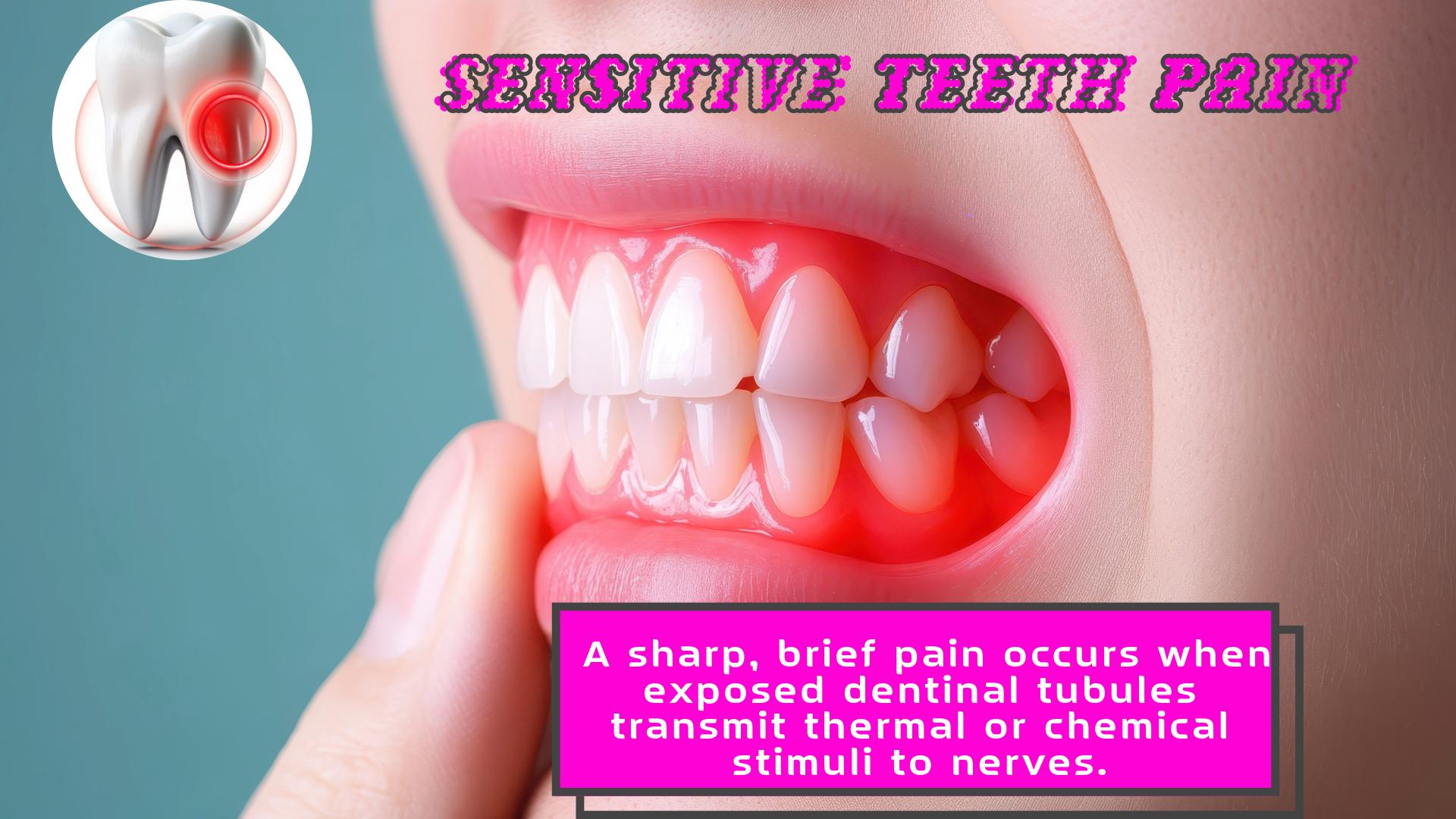
Sensitivity is a sharp, sudden and short-lived pain1 when a tooth meets cold, heat or touch. It often comes from a root surface left exposed where the gum has receded. Under the enamel and on the root lies dentine, a layer with tiny channels that lead towards the nerve. When dentine is exposed, cold or sweet things can set off the pain.
The condition has a strict definition: pain from exposed dentine that cannot be explained by any other dental disease2. So a dentist can call it sensitivity only after ruling out decay, a cracked tooth or a leaking filling, which can feel similar.
Receding gums are common in adults, with both good and poor oral hygiene3, and the exposed root is often linked with sensitivity. Whether brushing too hard causes receding gums is not settled by the evidence4. Tooth whitening can also cause sensitivity: in trials of home whitening, it was one of the most common side effects5, more so with stronger products, and usually mild and short-lived.
How common is it? Estimates vary widely with who was studied. One review's best estimate is about 1 in 10 people6; the average across its studies was about 1 in 3, and single studies ranged from about 1 in 100 to more than 9 in 10.
What you can do right now
- Avoid the trigger. Keep away from very cold or hot food and drink, and from cold air, while the tooth is sore. Scottish dental guidance (SDCEP) also advises avoiding acidic foods and drinks1.
- Dab on some sensitivity toothpaste. The same guidance suggests putting a small amount on the sensitive area with a finger1. We found no trial of how quickly this works, but it is a reasonable first step.
- If you take painkillers, swallow them. Follow the pack and do not go over the maximum daily dose. Never hold a tablet against the tooth or gum: SDCEP warns this can damage the tissue7. This self-care advice covers 24 hours; if you still need pain relief after that, ask a pharmacist.
That is as far as "immediately" honestly goes. None of the sources we checked shows any toothpaste, treatment or home method stopping sensitivity at once.
What works over days and weeks
Sensitivity toothpastes are the best-studied option. A 2026 review included 93 trials and pooled 47 of them to compare these toothpastes with a regular fluoride toothpaste after 2 weeks of use. Toothpastes with stannous fluoride or arginine reduced sensitivity8 to a blast of cold air. The certainty was high for stannous fluoride and low for arginine. The authors call both first-line self-care options and suggest choosing by preference, tolerance and availability, not by expecting one to work better.
Potassium toothpastes can help on some measures, but their evidence is weaker. An older Cochrane review of 6 studies found that potassium nitrate reduced sensitivity to air after 6 to 8 weeks, but it found no clear evidence overall2, partly because results depended on how sensitivity was measured.
How soon? One trial, run by a toothpaste manufacturer with 118 people completing it, found that potassium nitrate, stannous fluoride and oxalate toothpastes eased cold-air sensitivity more than a regular toothpaste from day 3 onwards9. On a touch test, potassium nitrate was not better at day 3. A single company-run trial cannot settle how fast these products work, and many trials in this field are funded by industry.
In practice: choose a sensitivity toothpaste, brush with it twice a day, and give it a few weeks before you judge it.
Treatments a dentist can offer
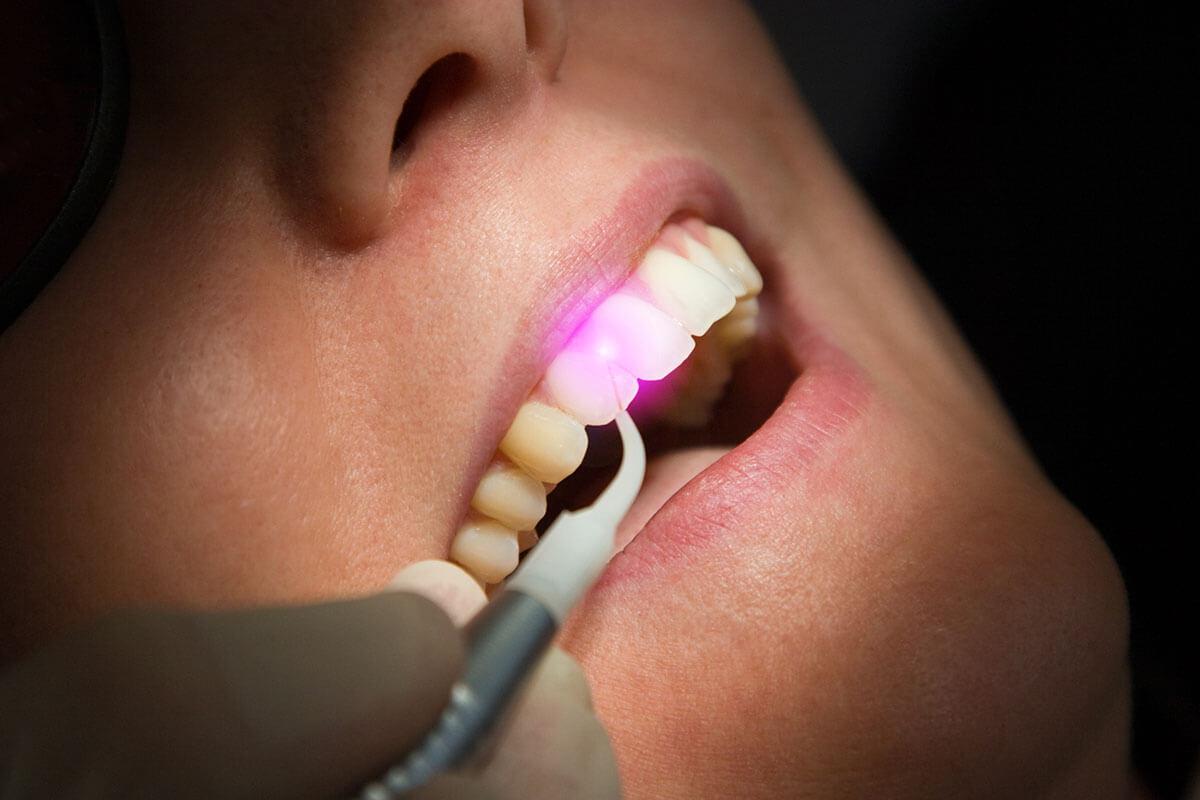
If toothpaste is not enough, a dentist can apply a treatment to the sensitive area, such as a fluoride varnish or a dentine bonding agent1. We found no reliable evidence on how quickly these in-surgery treatments work, or that one is better than the others.
The dentist will also look for the cause. Decay or a leaking filling needs treating in its own right. Where a receding gum has left the root exposed and there is no other problem, experts suggest monitoring the area3; gum surgery may be considered in some cases.
Home remedies: an honest verdict
- Salt water, clove oil, garlic, oil pulling and similar remedies. The sources we checked did not assess them for sensitive teeth, so we cannot recommend them for it. Clove oil's evidence for dental pain comes from products that dentists applied10, not from home use.
- Acidic "natural" rinses and whitening mixtures. Guidance advises avoiding acidic food and drink for sensitivity, so we advise against lemon or vinegar mixtures.
When to see a dentist
New sensitivity is worth a non-urgent dental visit: SDCEP advises seeing a dentist to rule out other causes1, such as decay. Book sooner if:
- the pain lingers after the cold or heat has gone, throbs, or starts on its own;
- it is in one tooth, or hurts when you bite;
- you can see a hole, a crack or a broken filling;
- a sensitivity toothpaste has not helped after a few weeks.
Ask for an urgent appointment if your face, cheek or jaw is swollen or you have a high temperature.
See a dentist if toothache lasts more than 2 days or does not go away with painkillers11.
Emergencies. Call 112 or go to the nearest emergency department if you have swelling that makes it hard to breathe, speak or swallow, a swollen or painful eye or sudden problems with your eyesight, swelling in your neck, a lot of swelling inside your mouth12, or if you find it hard to open your mouth.
Frequently asked questions
Is tooth sensitivity a sign of decay?
It can be. Sensitivity from exposed dentine is diagnosed only after other causes, such as decay, a crack or a leaking filling, have been ruled out. That is why new sensitivity is worth a dental check.
How common are sensitive teeth?
Estimates vary widely with who was studied. One review's best estimate is about 1 in 10 people, while the average across its studies was about 1 in 3.
Hydrogen peroxide or carbamide peroxide: what is the difference?
Carbamide peroxide releases hydrogen peroxide in the mouth. Rules on strength refer to the hydrogen peroxide a product contains or releases.
Is the dental anaesthetic safe for my baby?
It can be used in pregnancy. In one study of 210 exposed pregnancies, the rate of major birth defects was not statistically different from that in unexposed pregnancies, but this is a single study.
Is rinsing with 3% hydrogen peroxide safe for whitening?
We found no study that tested household peroxide as a tooth whitener, so there is no basis for calling it safe or effective. EU rules allow freely sold oral products up to 0.1%. Ask a dentist instead.
Can I take ibuprofen and paracetamol together after a dental implant?
Many people can, and in trials after wisdom tooth surgery the combination relieved pain better than a dummy tablet. Follow the pack on doses. Check with your dentist, doctor or pharmacist first if you take blood thinners, are pregnant or have been told to avoid anti-inflammatories.

Dt. Dilek AKSU GÜLER
Dentist · Founder
She has completed advanced training in implantology and works in aesthetic restorations and smile design.
Sources
- SDCEP Management of Acute Dental Problems: Dentine hypersensitivity. Scottish Dental Clinical Effectiveness Programme (SDCEP). 2026.↩acutedentalproblems.sdcep.org.uk
- Potassium containing toothpastes for dentine hypersensitivity (Cochrane review). Cochrane Database of Systematic Reviews 2006;(3):CD001476 (Poulsen S et al.). 2006.↩doi.org
- Mucogingival conditions in the natural dentition: narrative review, case definitions, and diagnostic considerations. Journal of Clinical Periodontology 2018;45 Suppl 20:S190-S198. 2018.↩doi.org
- Does tooth brushing influence the development and progression of non-inflammatory gingival recession? A systematic review. Journal of Clinical Periodontology 2007;34(12):1046-1061. 2007.↩doi.org
- Home-based chemically-induced whitening (bleaching) of teeth in adults. Cochrane Database of Systematic Reviews 2018; CD006202.pub2. 2018.↩doi.org
- Prevalence of dentin hypersensitivity: systematic review and meta-analysis. Journal of Dentistry 2019;81:1-6 (Favaro Zeola L, Soares PV, Cunha-Cruz J). 2019.↩doi.org
- SDCEP Management of Acute Dental Problems: Analgesia (supporting tool). Scottish Dental Clinical Effectiveness Programme (SDCEP). 2026.↩acutedentalproblems.sdcep.org.uk
- Dentifrice formulations for the treatment of dentin hypersensitivity: a systematic review and network meta-analysis. Periodontology 2000, 2026 (Gormley AJ et al.). 2026.↩doi.org
- Randomized clinical trial evaluating kinetic benefits of desensitizing agents: magnitude, onset, and stability of relief. Journal of Periodontology 2025;96(12):1339-1351 (Biesbrock AR et al.). 2025.↩doi.org
- Analgesic efficacy of phytotherapeutic agents in dental pain management: a systematic review. International Journal of Dentistry 2025;2025:5614623 (Reddy MS et al.). 2025.↩doi.org
- NHS: Toothache. NHS (nhs.uk). 2024.↩nhs.uk
- NHS: Dental abscess. NHS (nhs.uk). 2026.↩nhs.uk