
What is a tooth abscess, and how is it treated?
A tooth abscess is a build-up of pus in a tooth or the gum around it, caused by an infection. It will not go away on its own and needs urgent treatment by a dentist. The dentist drains the pus under local anaesthetic and treats the cause, usually with root canal treatment or by removing the tooth. Antibiotics are added only in some cases.
- An abscess needs a dentist: the pus is drained and the cause in the tooth or gum is treated.
- Antibiotics are for a spreading infection, fever or pus that cannot be drained at once; they do not replace treatment.
- Pain relief while you wait is temporary; do not squeeze or prick the swelling yourself.
- Swelling that affects breathing, swallowing, your eye or your neck is an emergency.

What causes a tooth abscess
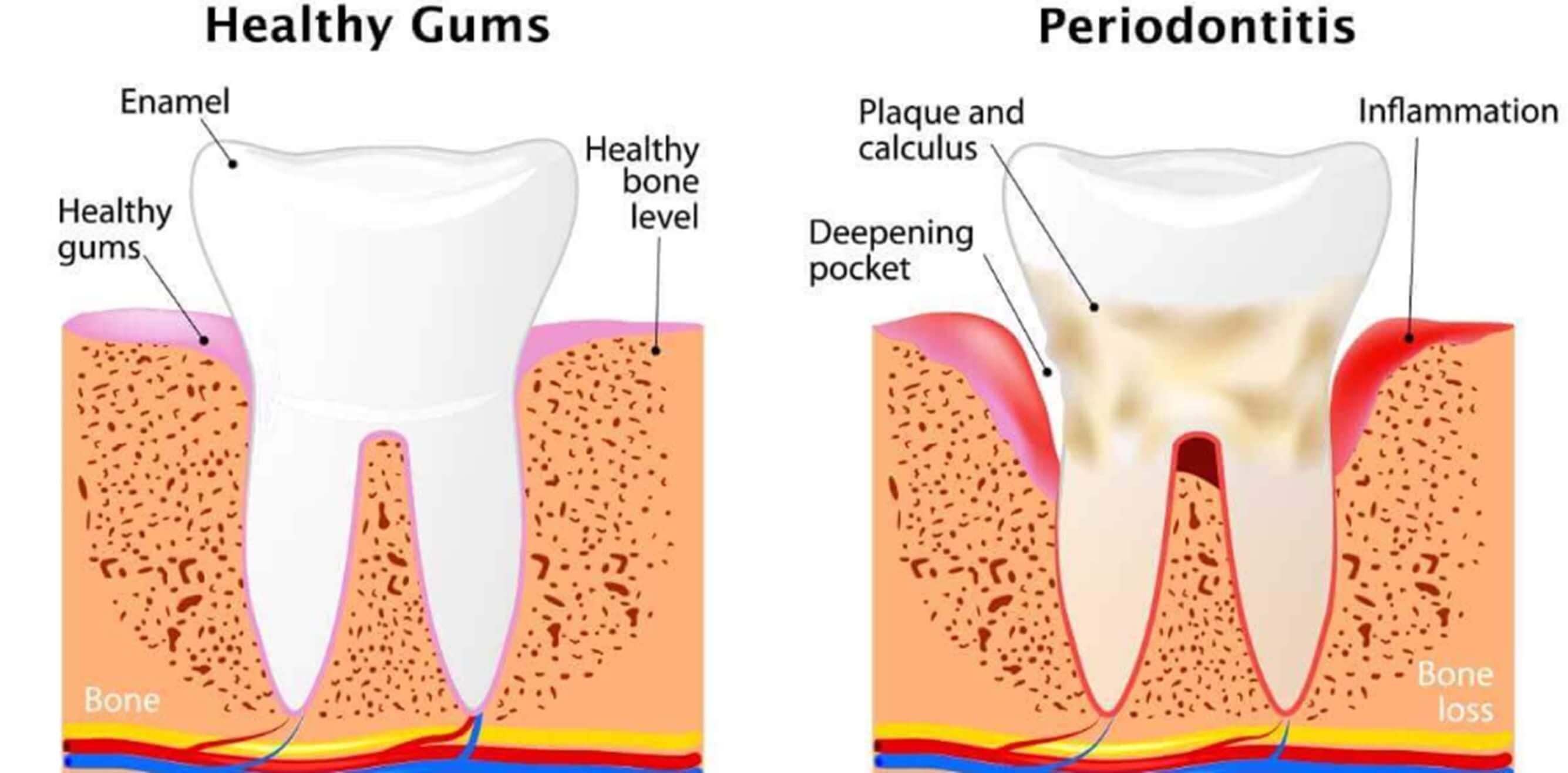
An abscess is the body's way of walling off an infection: pus collects in a pocket in the jawbone at the tip of a root, or in the gum beside a tooth. The things the NHS links to a dental abscess include tooth decay, gum disease, an injury to the tooth1, a tooth that has not come through properly (an impacted tooth), and radiotherapy or chemotherapy.
When decay reaches the nerve inside a tooth, the nerve can die and infection can spread through the root canal to the bone around the tip of the root. An abscess in the gum usually sits beside a tooth affected by gum disease. The two can feel alike, and only an examination, often with an X-ray, shows which it is.
Signs of an abscess
- Pain in the tooth or gum, which can be throbbing and worse when you bite
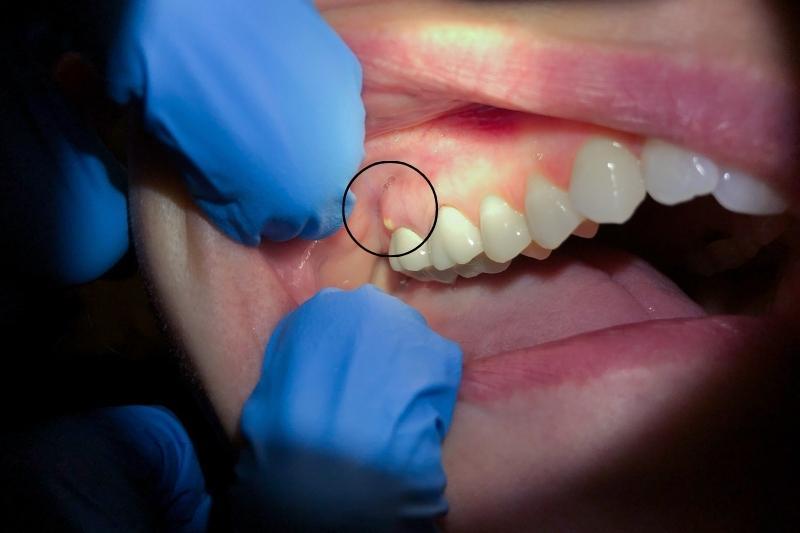
- A red, swollen area on the gum, sometimes with a bad taste if pus leaks out
- A swollen face or jaw
- A high temperature
The NHS lists a swollen face or jaw and a high temperature1 among the symptoms of an abscess and advises asking for an urgent dental appointment if you think you have one. Some of these signs overlap with other causes of toothache, so an examination is needed to confirm an abscess.
How a dentist treats an abscess
The treatment has two parts: draining the pus and dealing with its cause. The NHS describes it plainly: the dentist drains the pus1 under local anaesthetic, and if a problem with the tooth caused the abscess, you may need root canal treatment or the tooth may be removed. Scottish dental prescribing guidance (SDCEP) tells dentists to treat an abscess first with local measures2: drainage and, where possible, removing the cause.
- Root canal treatment cleans the infected inside of the tooth and seals it, so the tooth can be kept. The NHS says it usually takes 2 or more appointments3, each lasting 1 to 2 hours or sometimes longer. Afterwards the area may feel swollen and sore, and this should get better in a couple of weeks. If the pain or swelling gets worse instead, contact your dentist.
- Removing the tooth is the other way to remove the cause, when the tooth cannot be saved or you choose not to keep it.
- Treating the gum: when the abscess comes from gum disease, the pus is drained and the gum disease itself needs treatment.
How a tooth with an infected nerve is treated step by step is explained on the root canal treatment page.
Do you need antibiotics?
Not always. SDCEP says antibiotics are needed only if the pus cannot be drained straight away2, if the infection is spreading (growing swelling, or swollen glands in the neck), or if it is affecting your whole body, for example with a fever or feeling unwell. An abscess confined to the tissue around the root is mostly isolated from the circulation, so very little antibiotic gets into it, which is why drainage comes first. If your immune system is weakened by an illness or a medicine, tell your dentist, because this can change the treatment and how urgent it is.
Trials have not shown that adding an antibiotic to root canal treatment helps. A 2024 Cochrane review found 3 small trials with 134 adults and no clear difference in pain or swelling4, with low to very low certainty evidence; the largest trial included people without an abscess. No trial tested antibiotics without dental treatment. If you are given antibiotics, the tooth still needs treatment, and your dentist tells you when to stop. SDCEP advises a review after about 3 days; if you get worse before then, contact your dentist without waiting.
Can an abscess heal on its own?
No. The NHS says a dental abscess will not go away on its own1. The pain may ease for a while, or the swelling may burst and leak a bad-tasting fluid. No source we checked says that an abscess heals once it drains, so the tooth still needs to be seen.
What you can do until your appointment:
- Take ibuprofen or paracetamol for the pain, if they are safe for you. Ask a pharmacist if you are not sure, for example if you are pregnant, take other medicines or have a long-term condition. Children under 16 should not take aspirin. Do not take more than the dose on the pack.
- Check the labels: taking two products that both contain paracetamol5 can lead to an accidental overdose. If you think you may have taken too much paracetamol, get urgent medical advice straight away, even if you feel well.
- Swallow the tablets. Do not hold a painkiller against the gum: SDCEP warns that a tablet placed next to the painful area can damage the tissue6.
- Eat soft food, use a soft toothbrush and avoid very hot or very cold food and drinks.
- Do not squeeze, prick or cut the swelling yourself. A dentist can drain it under local anaesthetic and treat the cause.
- This self-care advice covers the first 24 hours. If you still need pain relief after that, ask a pharmacist, and keep trying to get a dental appointment.
Painkillers only cover the time until treatment. They do not treat the infection.

When to see a dentist, and when it is an emergency
Ask for an urgent dental appointment if you think you have an abscess, if your face or jaw is swollen, or if toothache comes with a high temperature. The NHS toothache page lists these as reasons to see a dentist7.
Emergencies. Call 112 or go to the nearest emergency department, without waiting for a dental appointment, if you:
- find it hard to breathe, speak or swallow
- have a swollen or painful eye, sudden problems with your eyesight, or a swollen neck
- have a lot of swelling inside your mouth
- find it hard to open your mouth
A dental infection can, rarely, lead to sepsis, when the body's response to an infection starts to damage its own organs. SDCEP describes sepsis from a dental infection as rare but potentially life-threatening8. If you have an abscess and become confused or breathless, or have uncontrollable shivering (rigors), a racing heart or mottled skin, get emergency help.
Frequently asked questions
Which shade should I choose for an implant crown?
Usually the one that matches the teeth next to it, since a single crown should blend in. If you want your own teeth lighter too, discuss that before the crown's shade is chosen.
I had gum disease. Can I have implants?
A history of gum disease (periodontitis) does not on its own rule out an implant, but active disease is treated first. In 14 prospective studies, implants were lost at about 1.75 times the rate in people with that history. Regular cleaning and reviews are part of the plan.
I take tablets for osteoporosis. Can I have implants?
Tell your dentist, and do not stop the medicine yourself. The risk depends on the medicine, why you take it, the dose and for how long. Osteoporosis doses are assessed separately from the high doses used in cancer treatment, where implants are usually not appropriate.
I grind my teeth. Will a night guard protect the implant?
In 27 studies, people judged likely to clench or grind their teeth had about 2.2 times higher odds of implant failure than people who do not (an odds ratio). A night guard may be advised to protect the crown or bridge from the forces of clenching. It has not been shown to prevent implant loss.
How many implants do I need for three missing teeth?
There is no fixed rule. Some gaps get one implant per tooth, others a bridge on two implants. It depends on the bone, the bite and the position of the gap, and is decided after a 3D scan.

Dt. Dilek AKSU GÜLER
Dentist · Founder
She has completed advanced training in implantology and works in aesthetic restorations and smile design.
Sources
- NHS: Dental abscess. NHS (nhs.uk). 2026.↩nhs.uk
- SDCEP Drug Prescribing for Dentistry: Dental abscess. Scottish Dental Clinical Effectiveness Programme (SDCEP). 2026.↩sdcepdentalprescribing.nhs.scot
- NHS: Root canal treatment. NHS. 2025.↩nhs.uk
- Systemic antibiotics for symptomatic apical periodontitis and acute apical abscess in adults (Cochrane review, 2024). Cochrane Database of Systematic Reviews 2024;5:CD010136. 2024.↩doi.org
- SDCEP Drug Prescribing for Dentistry: Odontogenic pain. Scottish Dental Clinical Effectiveness Programme (SDCEP).↩sdcepdentalprescribing.nhs.scot
- SDCEP Management of Acute Dental Problems: Analgesia (supporting tool). Scottish Dental Clinical Effectiveness Programme (SDCEP). 2026.↩acutedentalproblems.sdcep.org.uk
- NHS: Toothache. NHS (nhs.uk). 2024.↩nhs.uk
- SDCEP Drug Prescribing for Dentistry: Sepsis. Scottish Dental Clinical Effectiveness Programme (SDCEP). 2026.↩sdcepdentalprescribing.nhs.scot