
Is dairy bad after a tooth extraction?
There is no good evidence that it is. Two randomised trials in Germany compared people who ate dairy after mouth surgery with people who avoided it, and healing problems were no more common in the dairy groups. The advice to avoid dairy seems to be habit rather than evidence. What UK guidance does advise is soft food that is not too hot.
- Two randomised trials did not detect harm from milk, yoghurt or cheese after mouth surgery.
- They also did not show that dairy helps healing, and they cannot prove that it is safe for every person.
- Soft, not-too-hot food and leaving the socket alone matter more than whether the food is dairy.
- If your dentist gave you a reason specific to you, ask about it.
Where the advice comes from
The advice is common. In a German survey, 56% of 114 dentists and surgeons1 who answered said they tell patients to avoid dairy after oral surgery. It was given by 42% of the 38 oral surgeons and 65% of the 76 general dentists. In an international survey of 143 respondents in the same study, the recommendation could not be identified at all.
The same authors reviewed the literature and found that the idea of a harmful effect could not be supported by evidence1. They suggest the advice most probably dates from a now irrelevant risk of catching tuberculosis from milk products.
Articles online often explain the advice with theories: that milk proteins feed bacteria, that dairy leaves a residue in the socket, or that it breaks down the clot. These are theories. We found no study showing that any of them happens in a healing socket.
What the two trials found
The 2026 trial (wisdom teeth). A single-centre trial in Germany randomly assigned young people having all four impacted wisdom teeth removed to eat dairy at least three times a day for a week, or to avoid it completely. Of 203 people enrolled, 157 were analysed; the others were excluded, for example for not following the study instructions. Of those analysed, 3 of 77 in the dairy group2 and 8 of 80 in the no-dairy group had a complication over three months. That difference was not statistically significant. The authors concluded that dairy did not have a measurable effect on wound healing, either positive or negative. No one in either group developed a dry socket.
The 2025 trial (oral surgery more broadly). A two-centre trial in Germany studied 227 people aged 16 and over with a wound in the mouth after oral surgery. Problems with wound healing occurred in about 19 in 100 who ate dairy3 and about 20 in 100 who avoided it. The analysis found no link between dairy and healing in either direction. Unlike the first trial, this one included smokers and people on blood thinners.
The two trials measured different outcomes, so their percentages should not be compared with each other. What they share is the answer: neither detected harm from dairy.
What the trials cannot tell you
Two trials that found no difference are reassuring, but they have limits, and it is fairer to say what they are:
- Who was studied. The 2026 trial included only healthy young people, with an average age of about 19, having all four impacted wisdom teeth removed. It excluded smokers, regular drinkers, people on blood thinners, people with a weak immune system, pregnant women and anyone with lactose intolerance. More than half were given antibiotics2 around the operation, and most operations were under general anaesthesia. That is not the same as a single tooth taken out under local anaesthetic.
- Small numbers. The authors of both trials name the size of their study as a limitation. A small trial can miss a real difference.
- Smokers and blood thinners. The 2025 trial included them but did not report separate results for them. So neither trial answers the question for these groups on their own.
- No difference is not proof of sameness. Neither trial was designed to show that eating dairy and avoiding it are equivalent. They failed to detect a difference, which is a weaker statement.
- Dry socket. With no dry sockets in either group of the 2026 trial, it tells us nothing either way about dairy and dry socket.
- No sign of faster healing either. Neither trial showed that dairy helps healing.
The 2026 trial excluded people with lactose intolerance. If you have lactose intolerance or a milk allergy, keep to the diet you normally follow. If you take a medicine that should not be taken with milk, the instructions for that medicine still apply; that is about the medicine, not about the socket.
What to eat after an extraction
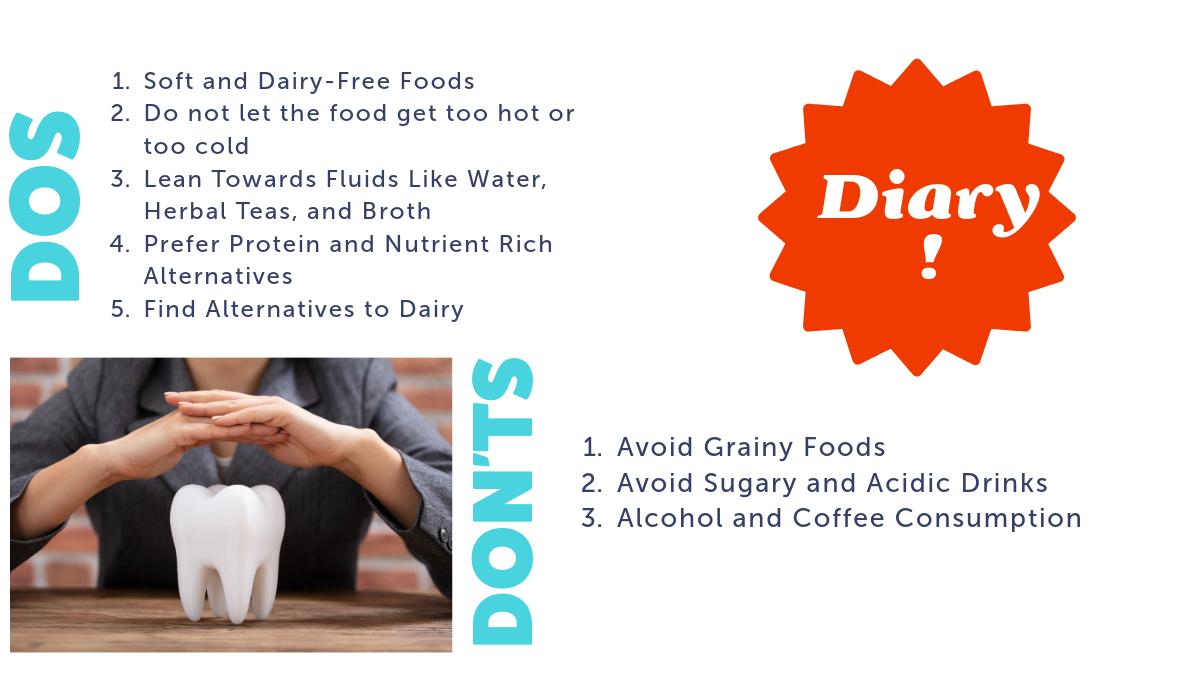
UK guidance says nothing against dairy. What it does say is about texture and temperature. After wisdom tooth removal, the NHS advises you to eat soft or liquid food4 until you can chew more comfortably, to avoid hard or crunchy food and food that could get stuck in the wound, such as nuts or seeds, and to avoid very hot drinks and alcohol.
In practice that allows plenty of choice:
- yoghurt, milk, soft cheese and other dairy, if you like it
- soup that has cooled, mashed potato, scrambled eggs, porridge, soft pasta
- ripe banana, smooth fruit purée
If you take blood thinners, the SDCEP leaflet for your situation advises avoiding hot liquids and hard foods5 for the rest of the day and not chewing on the affected side.
Protecting the clot matters more than the menu. UK guidance advises not rinsing on the day of the extraction6. So if you have had yoghurt or milk that first evening, do not rinse it away; from the next day, the NHS suggests gentle rinses with warm salt water or mouthwash. Once any bleeding has stopped, SDCEP also advises avoiding alcohol, smoking and exercise for 24 hours7.
When to see a dentist
What you eat is unlikely to be the problem, but these signs need a dentist:
- bleeding that does not stop after firm pressure on damp gauze for 20 minutes, pressed once more7; if you take blood thinners, bleeding that does not stop or starts again
- pain or swelling that is severe or getting worse, with painkillers not helping
- pain with a bad taste in your mouth, a high temperature, or feeling unwell (any one is enough)
- pain that starts or gets much worse a day or two after the extraction, with a bad taste or smell; the socket may look empty. This is the typical pattern of dry socket
The NHS lists the first three as reasons to get urgent help4 after wisdom tooth removal, and Scottish guidance advises urgent dental care6 for dry socket too. All four need a dentist soon, not a routine appointment.
Emergencies. Call 112 or go to the nearest emergency department if swelling makes it hard to breathe, swallow or speak, or if the area around your eye or your neck swells. The NHS lists these as reasons to go to an emergency department8.
Frequently asked questions
When can I have milk again after an extraction?
No study sets a waiting time for dairy. In one trial, people had dairy at least three times a day during the first week without more complications. Once the numbness has worn off, soft, not-too-hot food is what counts.
Are bleeding gums a sign of heart disease?
Gum disease is linked with heart disease in population studies, but that does not show one causes the other, and treating gums has not been shown to prevent heart attacks.
Can treatment be done in stages?
Often, yes. Pain, infection, decay and gum disease come first; cosmetic or replacement work can follow. Ask which parts of the plan are needed now and which can wait.
Is a mouthwash enough?
No. A mouthwash does not replace brushing and cleaning between the teeth. Chlorhexidine rinse is for short-term use when a dentist advises it, because it stains teeth.
Why don't dental adverts show prices?
Health promotion in Turkey may not include fees, discounts or campaigns; clinics authorised for health tourism have separate rules for promotion aimed abroad. A cost for your own treatment should follow an examination, any X-rays your teeth need, and a written plan.
Can I eat yoghurt after a tooth extraction?
The trials we found did not detect any harm from yoghurt or other dairy after mouth surgery. Yoghurt is soft, so it suits the first days, as long as it is not your dentist's specific advice to avoid it.
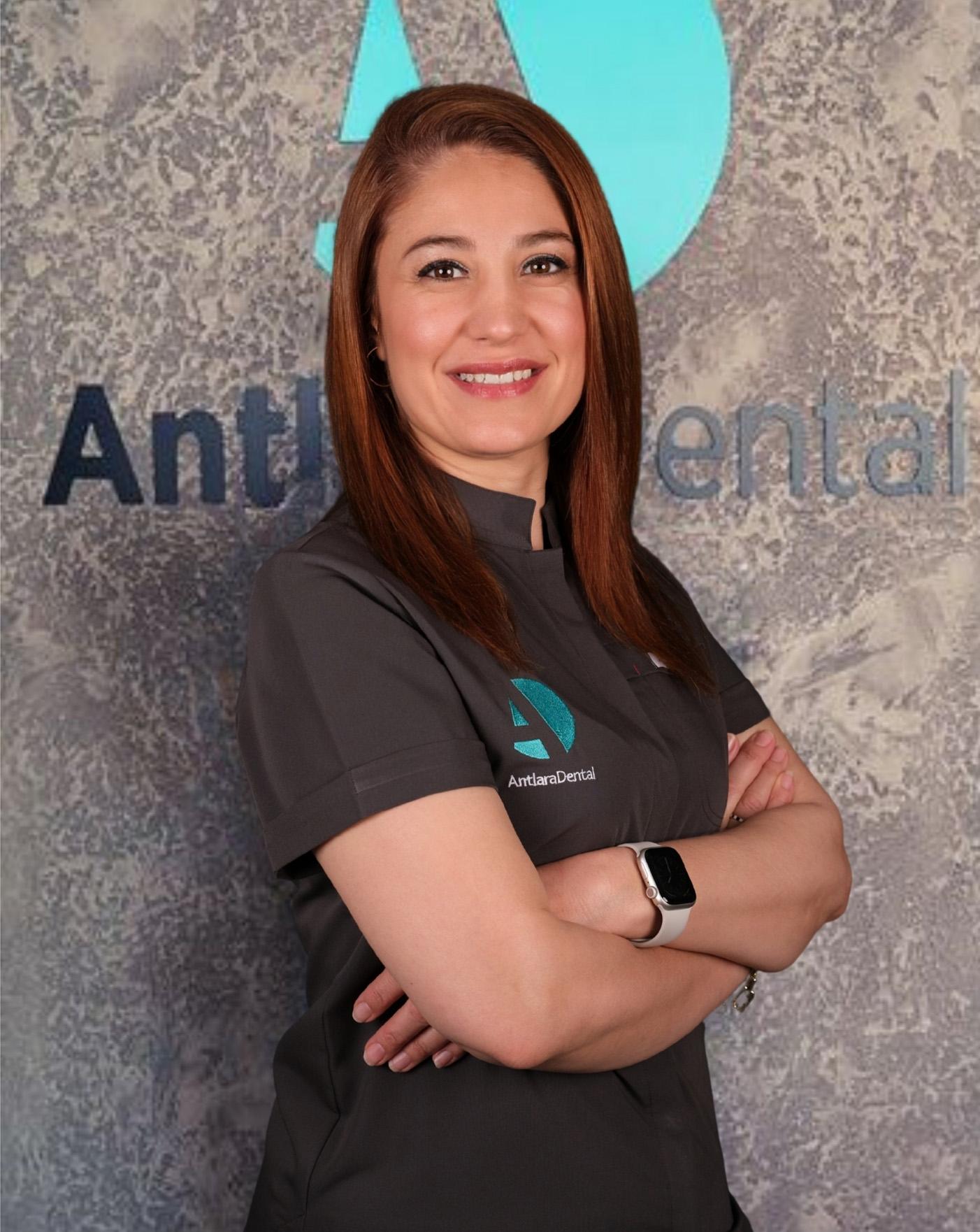
Dt. Dilek AKSU GÜLER
Dentist · Founder
She has completed advanced training in implantology and works in aesthetic restorations and smile design.
Sources
- Avoidance of milk and dairy products after oral surgery: is such a recommendation still valid? A cross-sectional study among German and international oral and maxillofacial surgeons and dental practitioners with review of the literature. Oral and Maxillofacial Surgery 2022;26(4):563-573. 2022.↩doi.org
- Influence of milk and dairy products on wound healing after wisdom teeth removal: a prospective clinical study. BMJ Nutrition, Prevention & Health 2026;9(1):e001432. 2026.↩doi.org
- Impact of postoperative dairy consumption on oral wound healing: critical analysis from a prospective, randomized and controlled trial. Head & Face Medicine 2025;21(1):40. 2025.↩doi.org
- NHS: Wisdom tooth removal. NHS (nhs.uk). 2024.↩nhs.uk
- SDCEP: Post-treatment advice for dental patients taking anticoagulant or antiplatelet medication (patient leaflet). Scottish Dental Clinical Effectiveness Programme (SDCEP), March 2022. 2022.↩sdcep.org.uk
- SDCEP Management of Acute Dental Problems (2nd ed.): Alveolar osteitis (dry socket). Scottish Dental Clinical Effectiveness Programme (SDCEP). 2026.↩acutedentalproblems.sdcep.org.uk
- SDCEP Management of Acute Dental Problems (2nd ed.): Post-extraction haemorrhage. Scottish Dental Clinical Effectiveness Programme (SDCEP). 2026.↩acutedentalproblems.sdcep.org.uk
- NHS: Toothache. NHS (nhs.uk). 2024.↩nhs.uk