
Does denture adhesive help, and is it safe?
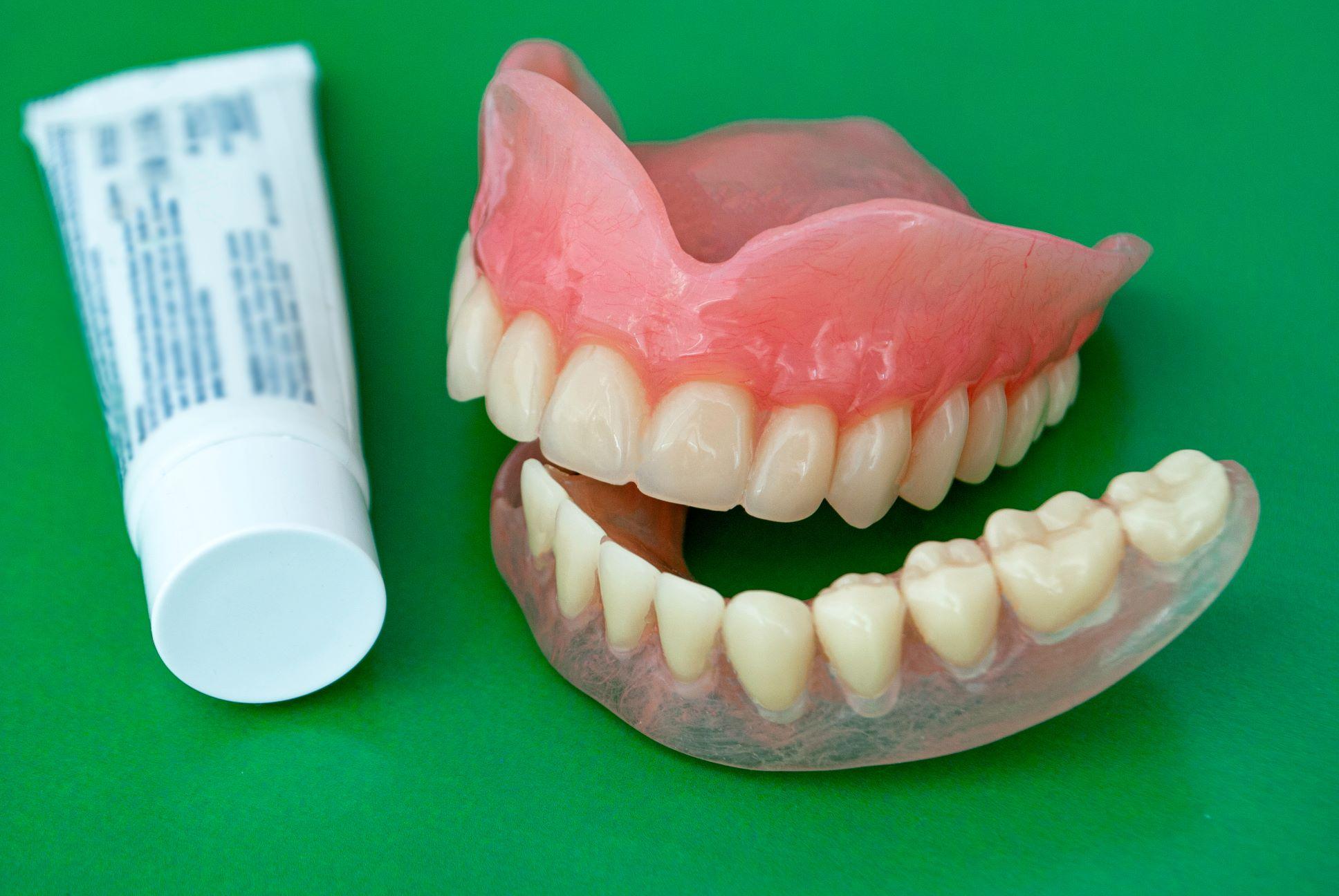
For people with complete dentures (a full set replacing all the teeth in a jaw), studies show that adhesive can help the denture stay in place and can improve biting and chewing, although the size of the benefit varies and the studies are of mixed quality. It is meant to be used in small amounts, removed from the denture and the mouth every day, and not relied on to hold a denture that no longer fits.
If you need more and more adhesive, need to apply it more than once a day, or cannot eat without it, the denture itself should be checked: it may need relining (new material added to its fitting surface so it fits the gums again) or replacing. Avoid adhesives that contain zinc; using very large amounts of zinc-containing adhesive over long periods has been linked to nerve and blood problems.
- Adhesive can improve how well a complete denture stays in place and how well you can bite and chew; it does not fix a denture that no longer fits.
- Use a small amount, remove it every day, and take the denture out at night unless your dentist advises otherwise.
- Needing more adhesive, needing it more than once a day, or not being able to eat without it are signs to have the fit checked.
What adhesive can and cannot do
A review of 39 studies in people with complete dentures found that adhesive, compared with none, improved how well the denture stayed in place, bite force and chewing performance1; the effect on bite force and chewing was smaller. A later network meta-analysis found cream and powder adhesives effective for holding the lower denture and for bite force on the back teeth2, with a moderate level of certainty. A review of 10 randomised trials rated the quality of evidence very low3. So adhesive helps many people, but how much it helps varies.
Adhesive can also make a well-fitting denture feel more secure. What it cannot do is make up for a denture with significant faults: professional guidance states that adhesives are not a remedy for ill-fitting dentures, which may need to be relined or replaced4, and the U.S. Food and Drug Administration (FDA) describes them as temporary relief5.
The studies are almost all about complete dentures. For a partial denture or a denture held by implants, ask your dentist before using adhesive.
Cream, powder or strip?
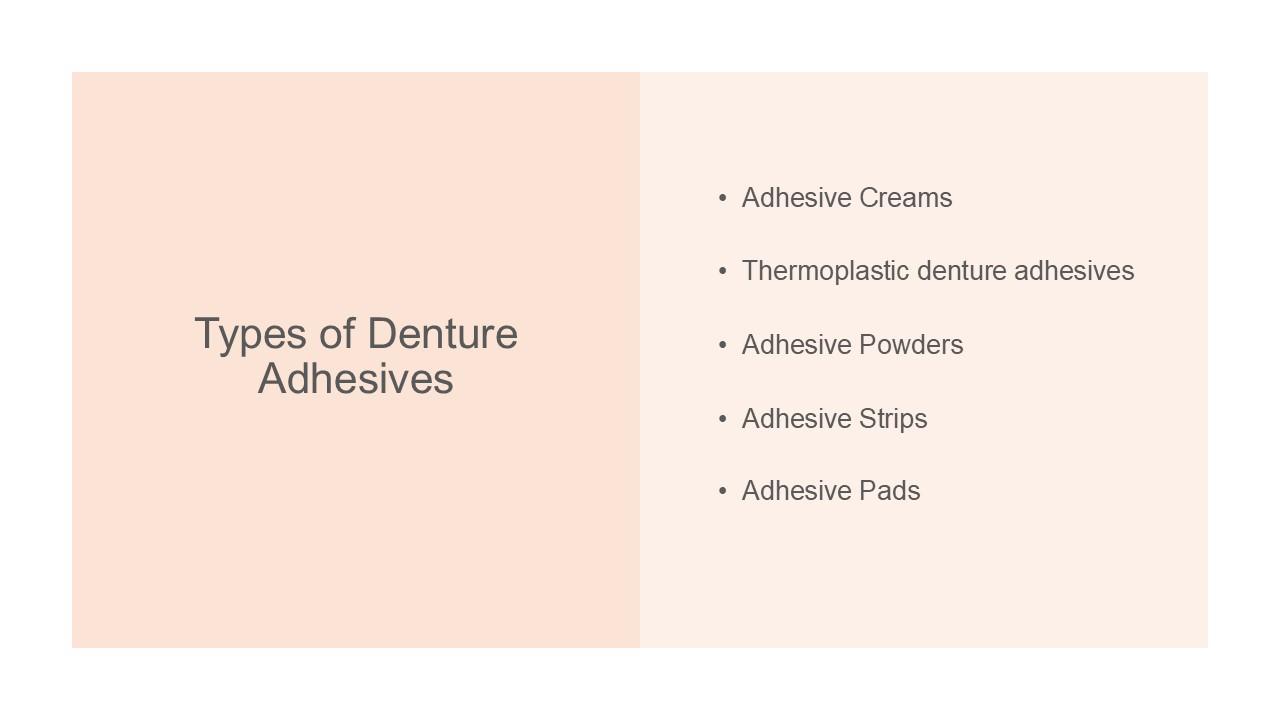
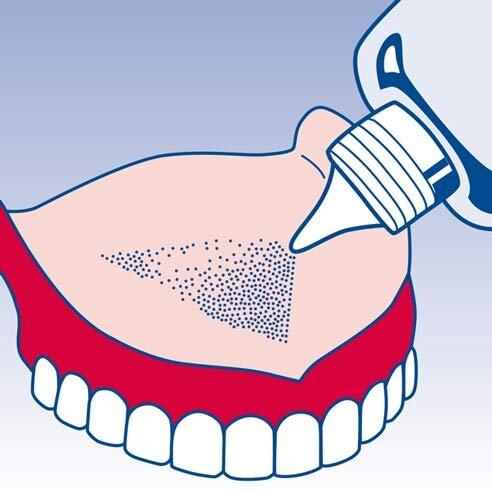
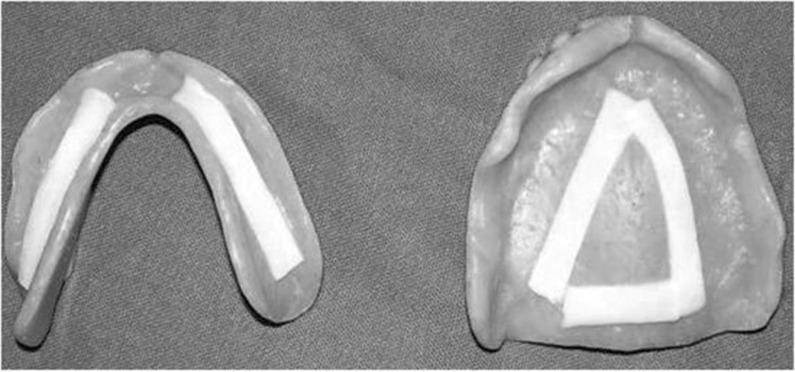
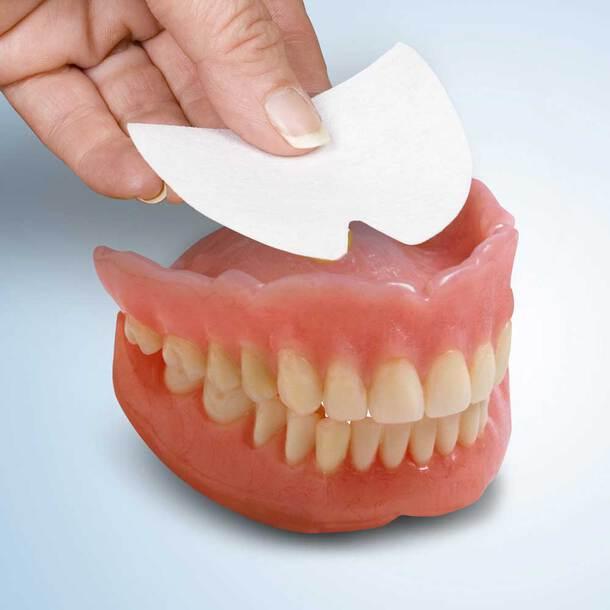
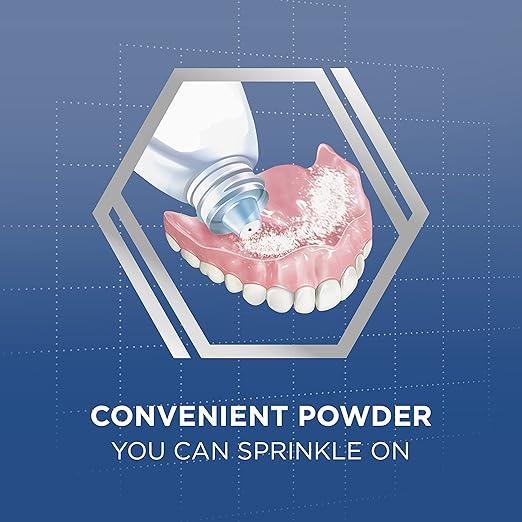
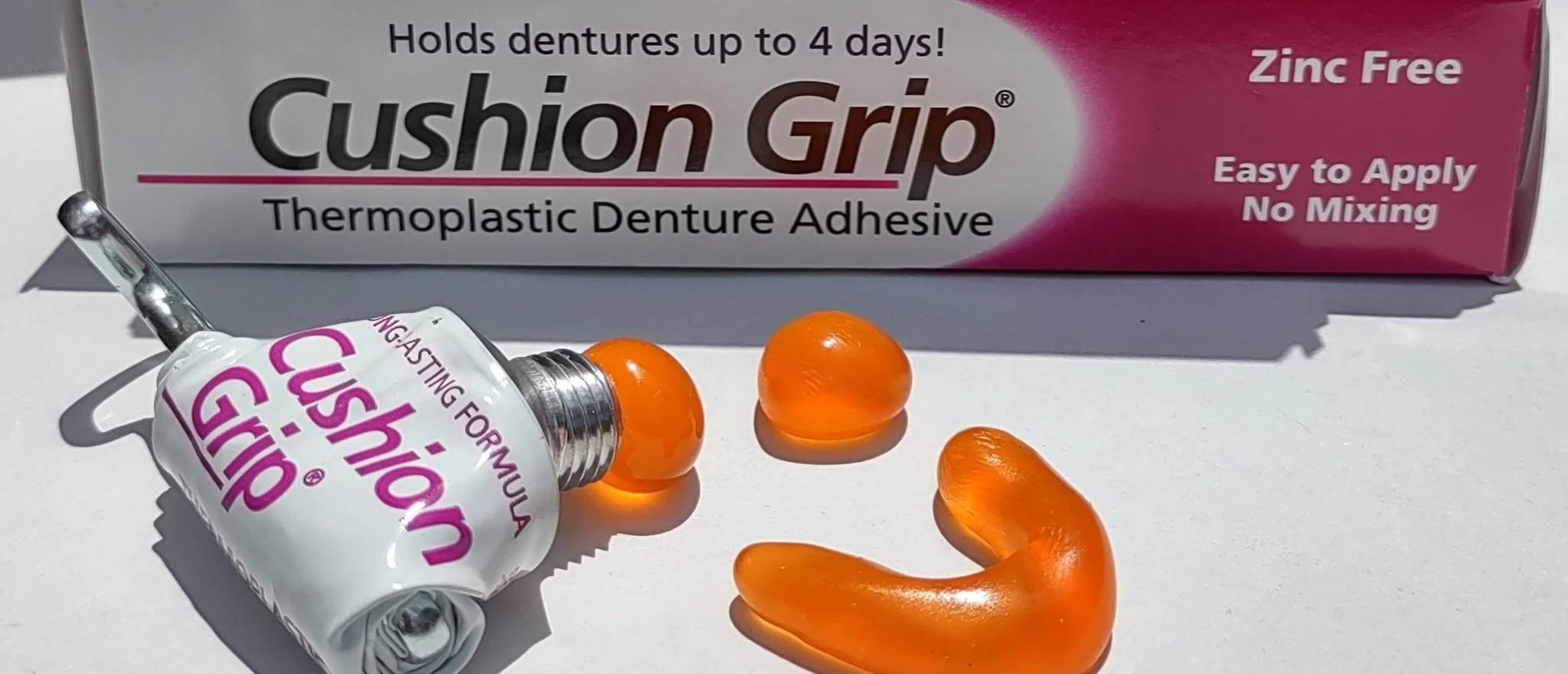
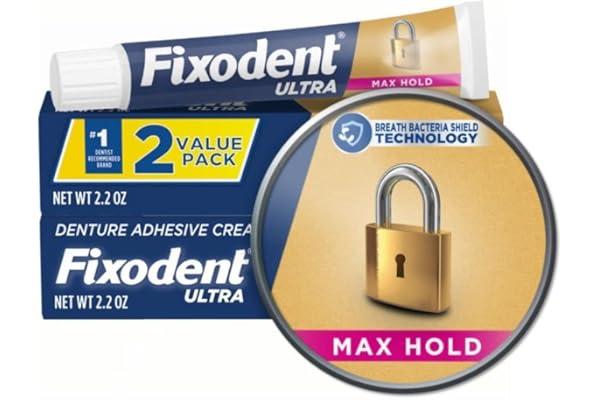
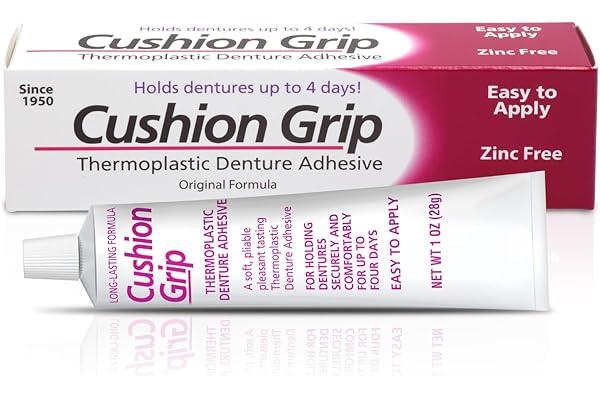
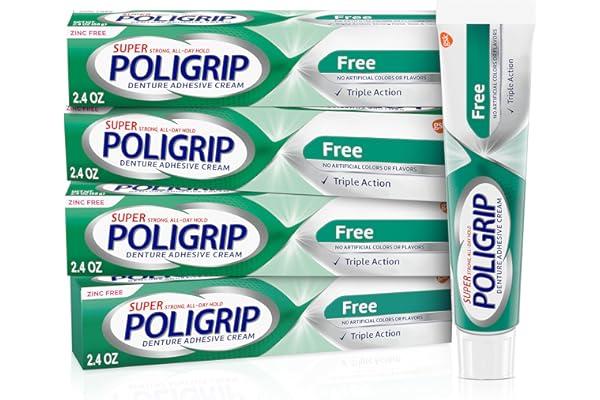
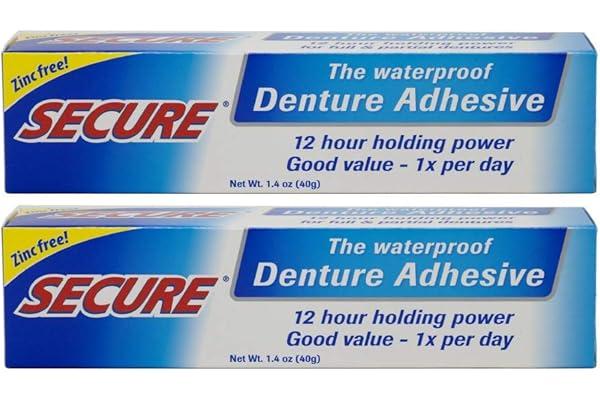
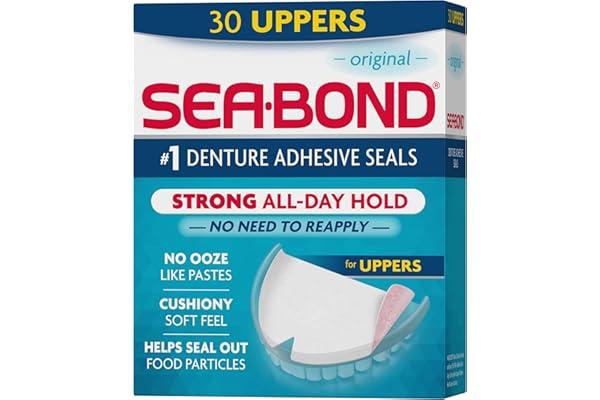
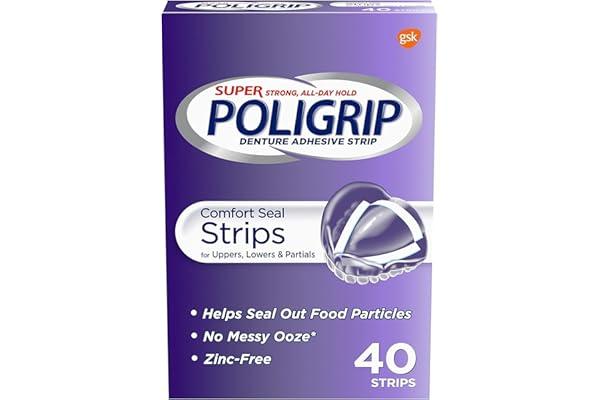
Adhesives come as creams, powders and strips or pads. The studies do not show that one form is best for everyone, and this article does not rank products. Each form is applied differently, so follow the instructions on the pack.
How to use adhesive safely
Part of the guidance below comes from a 2011 guideline and a 2019 expert report that were both funded by a company that makes adhesives and cleansers; it is professional consensus rather than trial evidence.
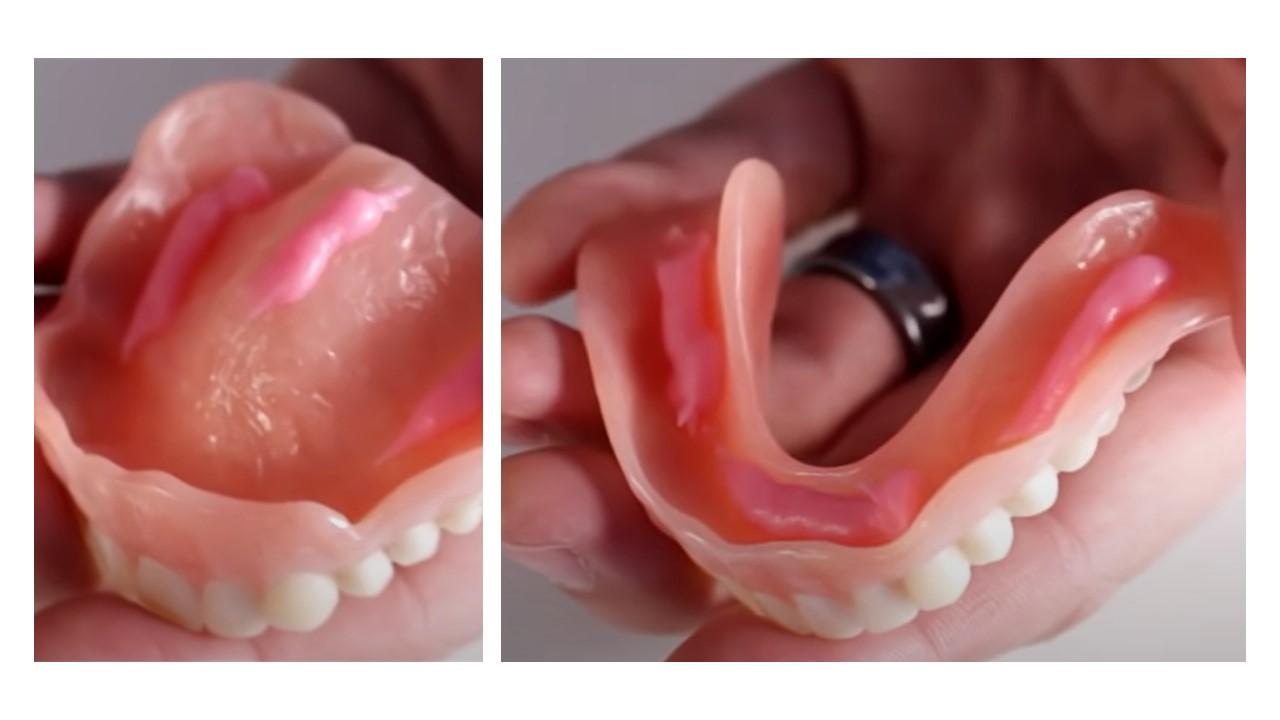
- Start with a clean denture. Apply adhesive only to a clean denture. For creams, an expert consensus says a small amount on a clean, dry denture once a day should be enough, and advises not eating or drinking for the first five minutes6 after putting the denture in.
- Use a small amount. Follow the product's instructions and use the smallest amount that holds. As a guide for creams, a 2011 guideline suggests three or four pea-sized dots on each denture7. If adhesive oozes out around the denture, you have used too much: wipe the excess away rather than swallow it.
- Keep an eye on how fast it goes. The FDA says a 2.4-ounce tube used for upper and lower dentures should last seven to eight weeks5, and suggests noting the dates you start and finish each tube.
- Remove it every day. Before sleep, take the denture out and clean all adhesive from the denture and from your mouth6, using gentle scrubbing so as not to damage the denture.
- Give your mouth a rest. Dentures should not be worn 24 hours a day7; take them out at night unless your dentist advises otherwise.
The zinc warning
Some denture adhesives have contained zinc. In published case reports and series, people who used very large amounts of zinc-containing adhesive over long periods developed copper deficiency, which can damage the nerves and blood cells. In one series of 11 patients, all had ill-fitting dentures and used large amounts of denture cream8; their copper and zinc levels returned to normal after stopping the cream. In the cases the FDA describes, people used at least two tubes a week. The FDA states that it has not found conclusive evidence that these problems result from using zinc-containing adhesive as instructed5.
What this means in practice:
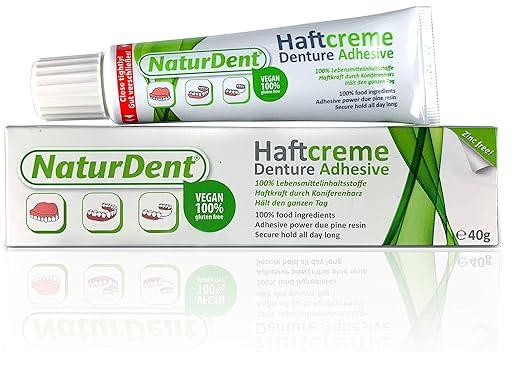
- A 2011 guideline advises avoiding zinc-containing adhesives as a precaution7.
- Zinc-free products exist, but ingredients may not always be listed; check the pack or ask a pharmacist.
- Excess adhesive combined with zinc supplements can add to the zinc in the body.
- If you notice numbness or tingling in your hands or feet while using adhesive, stop using it and see a doctor.
A large manufacturer announced in 2010 that it was stopping its zinc-containing adhesives9 as a precaution and would move to zinc-free versions. That does not mean every product today is zinc-free. Evidence on the effects of adhesives on the tissues of the mouth beyond six months was described as lacking6 as recently as 2019, which is one more reason for regular check-ups.
When adhesive means the denture needs attention
After teeth are removed, the jawbone shrinks, most noticeably in the first 3 to 12 months and then more slowly for life7. A denture that fitted well can therefore loosen over time, and the guideline recommends a check once a year.
A professional position statement says a denture should be evaluated for replacement10 if, among other things, adhesive is needed to eat or to keep the denture in place socially, or has to be applied more than once a day. The same statement warns against using more and more adhesive to make up for a poor fit. Other signs to have it checked:
- You need more adhesive than before for the same hold
- The denture rocks, slips or causes sore spots
- It is cracked, worn or damaged
There is no evidence to set how often dentures should be relined or remade10. The same statement suggests evaluating a denture that has been in use for more than five years; that is a prompt for an examination, not a rule to replace it every five years.
If a lower denture keeps coming loose despite a good fit, implants that hold it in place are one option. In randomised studies, implant-retained lower dentures were on average more satisfying than conventional ones11, although the size of the benefit is uncertain. For how dentures, bridges and implants compare, see alternatives to dental implants.
Cleaning and night-time care
- Every day, outside the mouth. Brush the denture with a soft brush and a non-abrasive denture cleaner, soak it in a cleaning solution as the product directs, and rinse it well before putting it back. A review of 44 clinical studies found that combining brushing with a chemical cleaner was more effective than either alone12. A Cochrane review found no good evidence on which cleaning method is best13.
- Cleaners stay outside the mouth. Denture tablets and solutions are only for use while the denture is out4.
- No hot water or household bleach. Never put a denture in hot or boiling water, and never use household bleach or powdered household cleansers. If a denture cleaner contains sodium hypochlorite, do not soak the denture in it for more than 10 minutes7. Follow the label, and ask your dentist before using a chemical cleaner on a denture with metal parts or a soft lining.
- Toothpaste. Advice differs: the American Dental Association accepts toothpaste or mild soap, other guidance says not to use ordinary toothpaste, and the 2011 guideline asks for a non-abrasive cleanser. Mild soap or a non-abrasive denture cleaner with a soft brush is common ground.
- At night. Clean the denture before you store it: a review found that cleaning before overnight storage reduces the growth of Candida yeast14, that storing it in plain water alone may encourage Candida, and that dry storage caused only clinically insignificant changes in shape. The 2011 guideline, by contrast, advises storing dentures in water to avoid warping. Ask your dentist which suits your denture's material.
- Your mouth too. Clean your gums, tongue and any remaining teeth, and remove all adhesive from them.
When to see a dentist
Make an appointment if:
- You need more adhesive than before, or need it more than once a day
- A sore spot or ulcer under the denture does not heal within a couple of weeks
- The denture rocks, slips, cracks or breaks (do not repair it yourself)
- Your gums under the denture are red, swollen or painful
If you have numbness or tingling in your hands or feet while using adhesive, stop using it and see a doctor.
Emergencies. If you think you have swallowed or breathed in a denture or a piece of one, seek urgent medical help. Difficulty breathing or swallowing: go to the nearest emergency department or call 112.
Frequently asked questions
Can I sleep with my dentures in?
Dentures are not meant to be worn 24 hours a day. Unless your dentist advises otherwise, take them out at night, clean off the adhesive, and clean the denture before storing it.
Can brushing remove a black dot?
Brushing with a whitening toothpaste can reduce some surface stain, and a professional clean removes more. Decay needs a dentist's treatment. Have an unexplained dot checked before treating it as stain. Scrubbing harder does not help.
Can whitening remove a black spot?
Not reliably. Whitening lightens natural tooth colour; it does not treat decay, and it should not be used on teeth with untreated decay. Find out what the spot is first.
Is an implant a false tooth?
Not on its own. The implant is a post in the jawbone that replaces the root. The tooth you see is a crown, bridge or denture attached on top of it, joined by a connector called an abutment.
How long does an implant last?
In a review of 46 studies of implants carrying a single crown, about 97 in 100 were still in place after five years and about 95 after ten. The crown on top is a separate part: about 89 in 100 crowns were still in use at ten years. No study here gives pooled figures beyond ten years.

Dt. Dilek AKSU GÜLER
Dentist · Founder
She has completed advanced training in implantology and works in aesthetic restorations and smile design.
Sources
- A systematic review and meta-analysis to evaluate the efficacy of denture adhesives. J Dent 2021;108:103638. 2021.↩doi.org
- Comparative effectiveness of types of denture adhesives in enhancing retention and function of complete dentures: a systematic review with network meta-analysis. Clin Oral Investig 2024;28(1):78. 2024.↩doi.org
- Efficacy of denture adhesives in complete denture wearers compared to denture wearers not using denture adhesives. A systematic review. Spec Care Dentist 2021;41(2):251-270. 2021.↩doi.org
- Oral Health Topics: Dentures. American Dental Association (ADA Library & Archives), topic last updated 12 April 2023. 2023.↩ada.org
- Denture Adhesives. U.S. Food and Drug Administration (consumer and safety page). 2018.↩fda.gov
- White paper on guidelines for the use of denture adhesives and their benefits for oral and general health. Global Task Force for Development of Guidelines on Use of Denture Adhesives / Oral Health Foundation; sponsored by GSK Consumer Healthcare. 2019.↩haleonhealthpartner.com
- Evidence-based guidelines for the care and maintenance of complete dentures. J Prosthodont 2011;20 Suppl 1:S1-S12 (American College of Prosthodontists task force; funded by GSK Consumer Healthcare). 2011.↩doi.org
- Myelopolyneuropathy and pancytopenia due to copper deficiency and high zinc levels of unknown origin II. The denture cream is a primary source of excessive zinc. Neurotoxicology 2009;30(6):996-9. 2009.↩doi.org
- GSK Consumer Healthcare warns consumers of potential health risks associated with long-term excessive use of zinc-containing denture adhesives. GlaxoSmithKline Consumer Healthcare (manufacturer press release). 2010.↩gsk.com
- The frequency of denture replacement (position statement). American College of Prosthodontists; approved 20 Oct 2015, reaffirmed 30 Oct 2018. 2015.↩prosthodontics.org
- Impact of implant support for mandibular dentures on satisfaction, oral and general health-related quality of life: a meta-analysis of RCTs. Clin Oral Implants Res 2009;20(6):533-44. 2009.↩doi.org
- Cleaning of removable dental prostheses: a systematic review. J Evid Based Dent Pract 2021;21(4):101644. 2021.↩doi.org
- Interventions for cleaning dentures in adults. Cochrane Database Syst Rev 2009;(4):CD007395. 2009.↩doi.org
- The effect of overnight storage conditions on complete denture colonization by Candida albicans and dimensional stability: a systematic review. J Prosthet Dent 2020;124(2):176-182. 2019.↩doi.org