
Which implant brand should I choose?
The studies used here do not rank implant brands. Published survival figures are averages pooled from many studies1, not the result of one brand. The system is chosen with your dentist for your bone, the gap and the tooth planned on top. Ask which system it is, why, and get it written down.
- A success rate quoted for a brand means little on its own. Ask whether it counts implants, crowns or patients, how it was defined and over how many years.
- The system matters years later: a loose screw, a worn part or a new crown needs parts and tools that fit that system.
- Keep a written record of the manufacturer, the system, the implant's width and length, and the parts on top.
- Smoking, a history of gum disease and clenching are linked to more implant loss in studies. Choosing a brand does not remove those risks.

What an implant system is
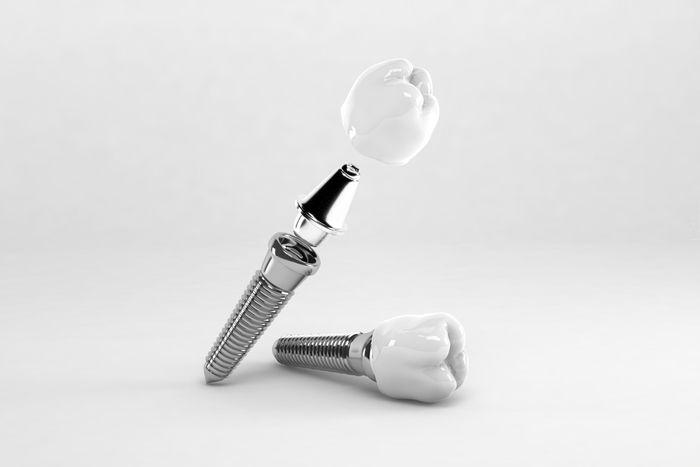
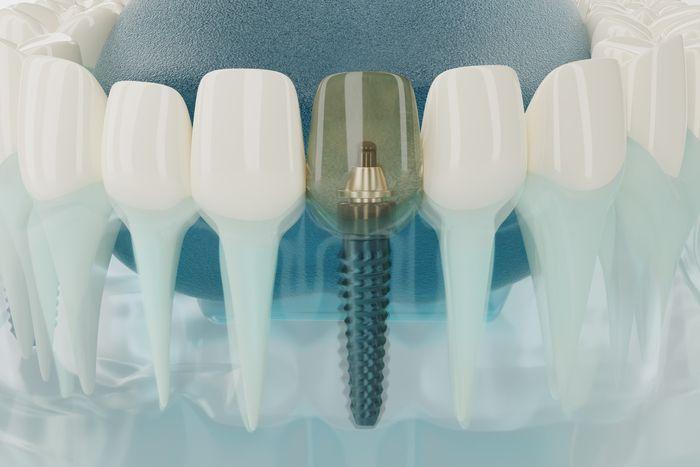
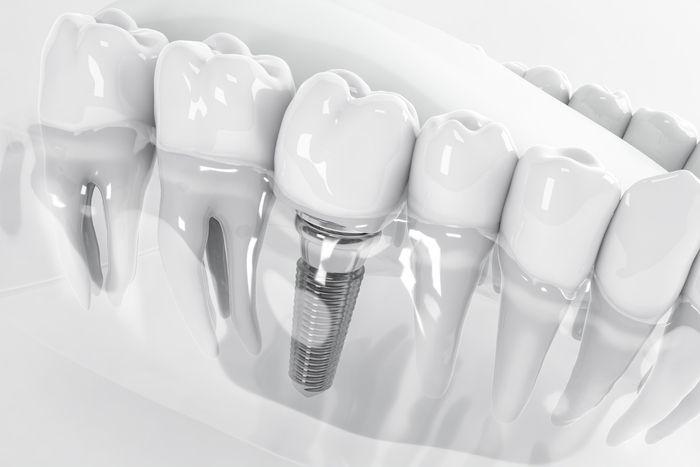
An implant tooth has several parts. The implant is the screw-shaped post placed in the jawbone. The abutment is the connector that sits on the implant. The crown is the visible tooth, and a small screw often holds the parts together. Implants are usually made of titanium or a titanium alloy; some are made of ceramic (zirconia).
Each manufacturer makes these parts as a system, designed to fit one another. Systems differ in shape, in how the abutment connects to the implant, and in the tools used to place and tighten them. The 2017 international consensus report on diseases around implants set out how they are defined. In doing so, it noted that there is no generic implant2: there are numerous implant designs, with different surfaces.
This article names no brands and compares no materials. We have not reviewed the evidence on ceramic implants.
What published figures can and cannot tell you
Implants carrying a single crown mostly stay in place. A review of 46 studies found that of every 100 such implants, about 97 were still in the mouth after five years and about 95 after ten1.
Those figures are averages pooled from studies in different countries and groups of patients. They are not the result of one clinic, dentist or implant brand, and they are not your personal risk. When a brochure, a website or a salesperson quotes a success rate, ask:
- Counted per what? Per implant, per crown or per patient. These give different numbers.
- Defined how? "Still in the mouth" is not the same as "trouble-free".
- Over how many years? A short follow-up says little about the long term.
- From whose data? A figure from the manufacturer is the manufacturer's data. Ask for the published study behind it.
No one can promise a lifetime result, whatever the brand. The reviews used here give figures for up to ten years only.
Why the system matters years later
Staying in place is not the same as trouble-free. Many problems involve the parts on top. Over five years, the 46-study review reported screw loosening in 8.8 per cent and a crown coming loose in 4.1 per cent1. Chipped porcelain was 3.5 per cent.
The crown on top is a separate part. In the same review, fewer crowns than implants were still in use: about 96 in 100 after five years and about 89 after ten. So a screw may need tightening, an abutment replacing or a new crown making.
Each of those repairs needs parts and tools that fit that system. If you move, or see another dentist later, they need to know exactly what is in your mouth. That is why the record matters as much as the choice.
What matters besides the brand
Studies link implant loss to things no brand choice removes. These observational studies show an association, not proven cause and effect.
- Smoking. In people smoking more than 20 cigarettes a day, implant loss was about 2.5 times as likely per implant3 as in non-smokers. Per patient it was about 4 times as likely, and no safe number of cigarettes was shown.
- A history of gum disease. The studies concern periodontitis, gum disease that has damaged the bone around the teeth. Across 14 prospective studies, implants were lost at about 1.75 times the rate4 seen in people without that history. Peri-implantitis was about 3 times more common. These were treated patients; implants are not placed while gum disease is active.
- Clenching or grinding. Across 27 studies, the odds of failure per implant were about 2.2 times higher5 in people assessed as probably clenching or grinding (an odds ratio).
- Inflammation around the implant. Peri-implantitis is inflammation with loss of the bone that supports the implant. A 57-study review found it in about 20 in 100 patients6. The rate depends on the definition used and the time in function. Daily cleaning helps keep plaque under control. Changes around the implant are found at regular reviews at the clinic, judged against the baseline record described below.
- Your health and medicines. Diabetes and bone-strengthening medicines are part of the same assessment. Tell your dentist about every medicine you take.
Planning matters too: the bone available, whether a graft is needed, and the design of the tooth on top. How implant treatment runs, stage by stage, is explained on the dental implants page.
Questions to ask your dentist
About the system
- Which implant system will you use for me, and why this one for my bone and the gap?
- How long have you worked with this system?
- What published clinical follow-up does it have, and over how many years?
- If I prefer a particular brand, do you use it regularly? If not, why would you advise against it?
About the parts on top and the future
- Is the abutment made by the implant's manufacturer, or by another company to fit it?
- How will the crown be fixed, and what is it made of?
- If a screw, an abutment or the crown needs replacing years from now, will parts be available, including for another dentist?
- If something goes wrong, what is covered, for how long, and what do I need to do, such as reviews and cleaning?
About your record
- Will my record show the manufacturer, the system name, the implant's width and length, its position and date, and the parts on top? Can I have a copy?
- Will an X-ray and gum measurements be taken when the crown is fitted?
The last question has a reason. The 2017 consensus report recommends an X-ray and probing measurements as a baseline2 when the crown or bridge is complete. Later changes around the implant are judged against that record.
When to see a dentist
Before you decide
See a dentist for an examination before choosing anything. The right system depends on your bone, gums, bite and health, which only an examination shows. Bring any plan you have been given.
If you already have an implant
If you do not know which system you have, ask the clinic that placed it for the record. Contact your dentist if you notice any of these:
- The implant, or the tooth on it, moves or feels loose
- A screw feels loose, or the crown comes off, cracks or chips
- Bleeding, pus, a bad smell or receding gum around the implant
- Pain on biting, or a bite that feels high
If the crown comes off, keep it and bring it with you.
Emergencies. Difficulty breathing or swallowing, rapidly spreading swelling of the face or neck, high fever or swelling around the eye are serious signs. Do not wait for the clinic's reply: go to the nearest emergency department or call 112.
Frequently asked questions
Can I get a copy of my X-rays and records?
Yes. You can examine your file and records and take a copy, yourself or through a representative. Ask for your X-ray records, your treatment plan and your copies of the consent forms, especially before a second opinion.
Where can I complain about a dental clinic?
Start with the clinic in writing. You can also call SABİM on 184, write to the provincial health directorate, or complain to the local dental chamber. Some disputes may go to a consumer arbitration committee or court; a lawyer can say which route fits.
Can I choose the implant brand myself?
You can say that you prefer a brand and ask whether your dentist uses it regularly. The dentist advises what suits your mouth. If they advise against your choice, ask why, and ask what published follow-up the system they propose has.
Is a "specialist" always a specialist?
Only for a specialty shown on the dentist's working certificate. A certificate course, master's degree or doctorate does not make a dentist a specialist. If you are unsure, ask which field it is and whether it is on the working certificate.
Is a second opinion rude?
No. You have the right to ask for another dentist's opinion. Ask for copies of your X-rays and plan, so that the second dentist sees the same records. They may still need new X-rays.
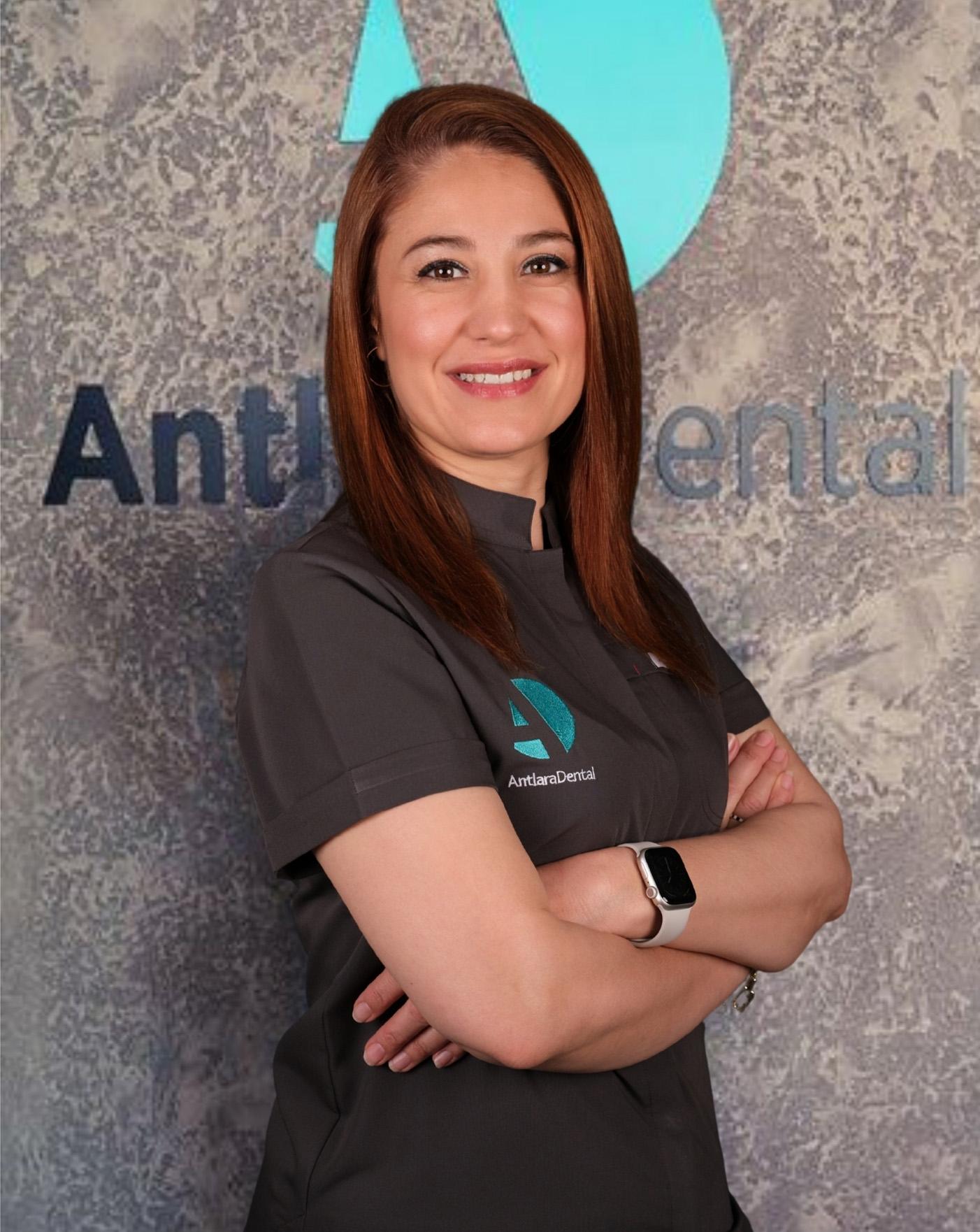
Dt. Dilek AKSU GÜLER
Dentist · Founder
She has completed advanced training in implantology and works in aesthetic restorations and smile design.
Sources
- Systematic review of the survival rate and the incidence of biological, technical and aesthetic complications of single crowns on implants (46 studies, mean follow-up 5 years). Clinical Oral Implants Research 2012;23 Suppl 6:2-21. 2012.↩doi.org
- Peri-implant diseases and conditions: consensus report of workgroup 4 of the 2017 World Workshop on the Classification of Periodontal and Peri-Implant Diseases and Conditions. Journal of Clinical Periodontology 2018;45 Suppl 20:S286-S291. 2018.↩doi.org
- Levels of smoking and dental implants failure: systematic review and meta-analysis (23 articles). Journal of Clinical Periodontology 2020;47(4):518-528. 2020.↩doi.org
- Effectiveness of implant therapy in patients with and without a history of periodontitis: systematic review with meta-analysis of prospective cohort studies (14 studies, >=36 months). Journal of Periodontal Research 2025;60(6):524-543. 2025.↩doi.org
- Bruxism and dental implants: systematic review and meta-analysis (27 studies; 2,105 implants in probable bruxers, 10,264 in non-bruxers). Journal of Oral Rehabilitation 2024;51(1):202-217. 2024.↩doi.org
- What is the prevalence of peri-implantitis? A systematic review and meta-analysis (57 articles, 2005-2021). BMC Oral Health 2022;22(1):449. 2022.↩doi.org