
Can an implant go in on the day a tooth comes out?
Sometimes. If the socket walls are intact and there is enough bone to hold the implant firmly, it can be placed at the extraction visit. This can save one surgery, but it does not suit everyone. In one review, about 95 in 100 implants placed straight into the socket survived, against about 98 in 100 placed in healed bone1, and the authors advise caution.
- Immediate placement means the implant goes into the socket at the extraction visit; it does not mean a tooth is fitted that day.
- Survival was a little lower than for implants placed in healed bone: about 95 against 98 in 100 implants.
- It needs intact socket walls, enough bone beyond the socket and an implant that holds firmly; sometimes this is only clear during surgery.
- If a socket wall is damaged or the area is badly infected, the socket is usually left to heal and the implant placed later.
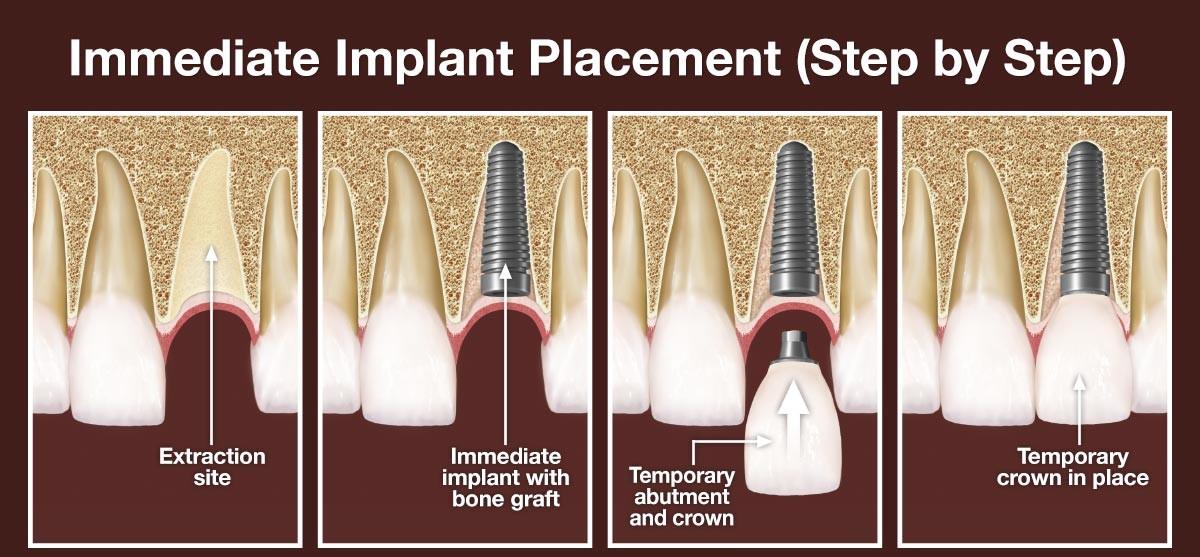
When the implant goes in, and when the tooth goes on
After a tooth is taken out, the studies used here compare two approaches:
- Immediate placement. The implant goes into the socket at the same visit as the extraction.
- Delayed placement. The socket is left to heal first, and the implant is placed later. How long the wait is depends on the site and on what the extraction showed, and it is set for you.
When the implant starts to carry a tooth is a second, separate choice, called loading. Research uses three timings: immediate (within a week), early (one week to two months) and conventional (after two months)2. An implant placed straight after an extraction may carry a temporary tooth soon afterwards, or it may be left to heal first. Ask your dentist which your plan includes, and what you will wear in the meantime.
What the studies found
The studies on timing are mixed, and the right choice depends on who is treated.
- Placing the implant straight into the socket. A review compared implants placed immediately after extraction with implants placed in healed sockets. Survival per implant was 95.2 per cent, against 98.4 per cent1 in healed bone. The difference was statistically significant, and the authors concluded that immediate placement should be done with caution. These are overall rates across the studies, not rates at a fixed time such as five or ten years, and survival means the implant was still in place, not that it was free of problems.
- Fitting the tooth straight away. A Cochrane review of 26 randomised trials found no convincing difference in failure of the implant or of the teeth fitted on it2 between immediate and conventional loading. Its follow-up ran from four months to one year, so it says nothing about five or ten years. A review of 39 randomised trials found slightly lower implant survival3 with immediate loading than with conventional loading. The difference was small but statistically significant. The Cochrane result was uncertain rather than proof that the two timings are equal, and many of its trials were at high or unclear risk of bias.
These figures are averages pooled from studies in different countries and groups of patients. They are not the result of one clinic, dentist or implant brand, and they are not your personal risk. The studies chose their patients, so the results apply to people who met their conditions.
What decides whether it is possible
First ask whether the tooth can be saved, and what the alternatives to an implant are, such as a bridge or a removable denture; they are compared in alternatives to dental implants. Your dentist looks at the tooth, the bone and your health before the extraction, usually with a 3D scan. Some of the decision can only be made during surgery, once the tooth is out.
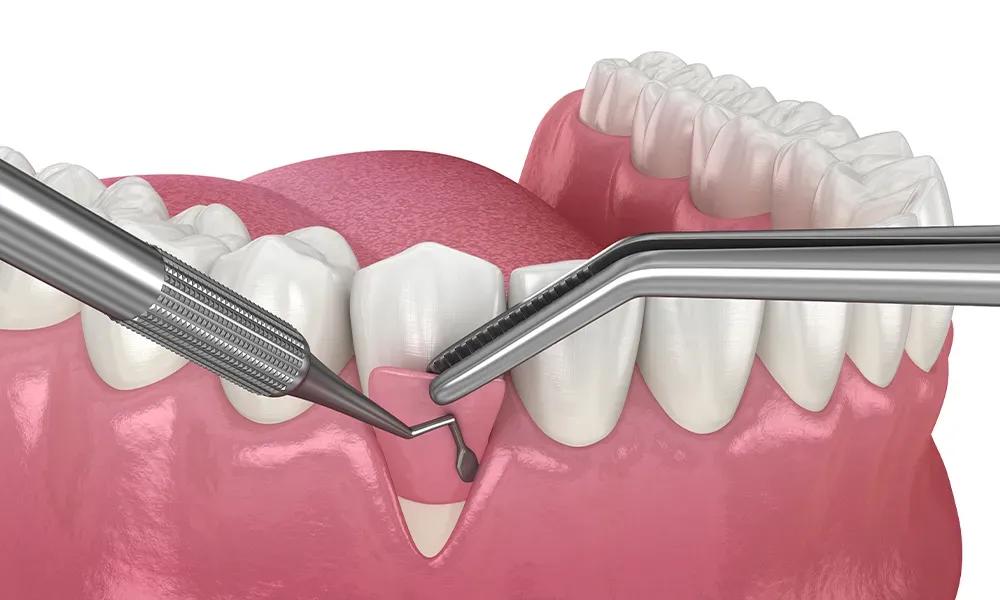
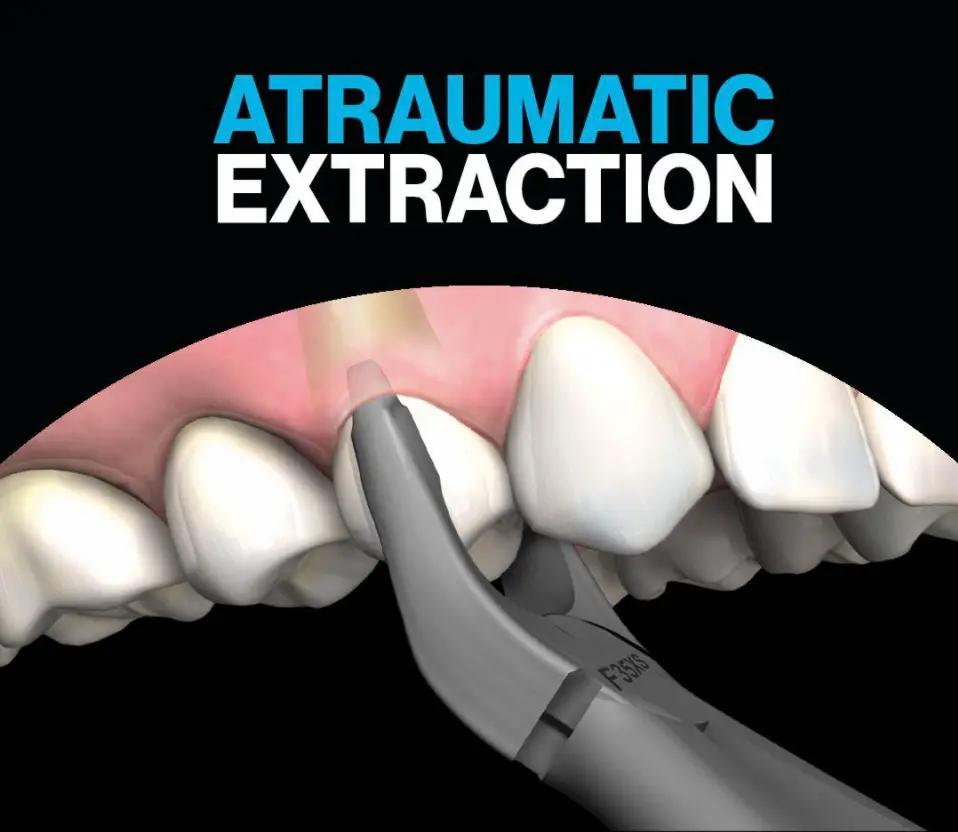
- The socket walls. The tooth is taken out as gently as possible to keep the thin bone around the socket. If a wall is damaged, or the area is badly infected, the implant usually waits until the socket has healed.
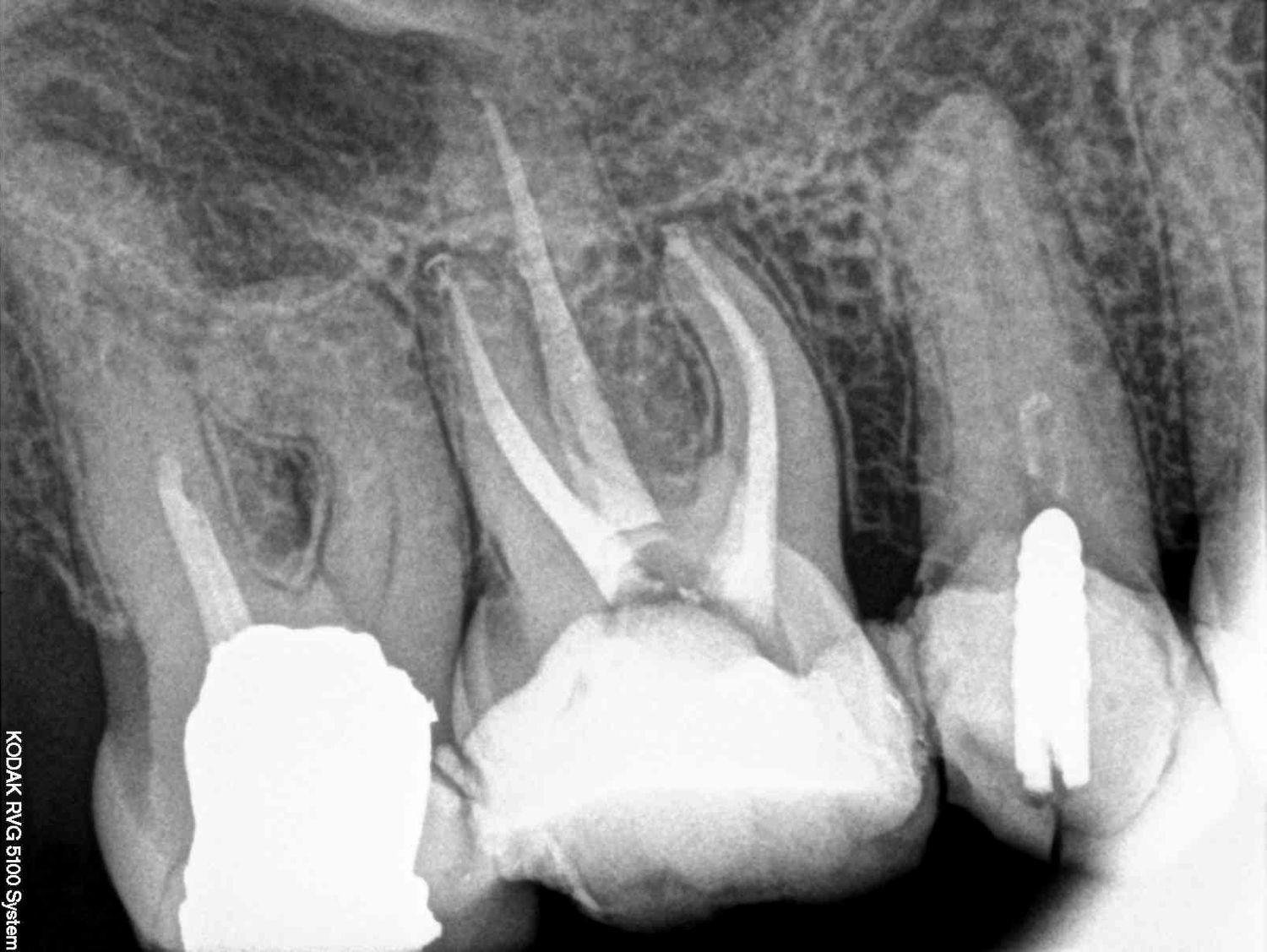
- Bone beyond the socket. The implant needs enough bone beyond or around the socket to hold firmly. In the back of the upper jaw the sinus limits how much bone there is; in the lower jaw, the nerve canal does.
- The shape of the root. A root is not the shape of an implant, so a gap can remain between them. It may be filled with bone-graft material. Back teeth with two or three roots leave larger sockets, which makes immediate placement harder.
- How firmly the implant holds. If the implant is not stable enough when it is placed, the plan changes. Your plan should say what happens then.
- Risk factors. Smoking is linked to early implant loss: a review of 32 observational studies gave an odds ratio of about 2.6 per implant4 for smokers. People treated for periodontitis, gum disease that damages the bone, lost implants at about 1.75 times the rate5 of people without that history in 14 prospective studies. Active gum disease is treated first. Clenching or grinding also adds risk. Tell your dentist about smoking, diabetes and every medicine you take.
Advantages and drawbacks
Advantages
- Often one surgery fewer, because the extraction and the implant are done at one visit. A graft or a later step may still be needed.
- No separate wait for the socket to heal before the implant goes in. A temporary tooth may be fitted early, but the final crown still waits until the implant has healed.
Drawbacks
- Slightly lower implant survival in studies than waiting for the socket to heal, as above.
- Graft material may be needed to fill the gap around the implant, which adds a step to the treatment.
- If the implant does not fuse with the bone, it is removed, and what happens next depends on the bone and on any infection. Ask about this before surgery.
- It cannot be promised in advance. The final decision may be made during surgery, so agree beforehand what happens if the implant cannot go in that day.
The reviews we use do not show that either timing gives a better-looking result.
The first days after surgery
Follow the written instructions you are given; they come first. Most of the guidance below (bleeding, rinsing and pain) is for tooth extraction in general, not specific to implants.
- Bleeding. If the site keeps bleeding, Scottish dental guidance advises biting firmly on a damp gauze pad or rolled cotton for 20 minutes6 before checking. If you do not take blood thinners and it has not stopped, press once more; if it still does not stop, you need urgent care. If you take blood thinners and bleeding does not stop or starts again, get urgent care. Once it stops, avoid alcohol, smoking and exercise for 24 hours, keep your head raised if you can and leave the clot alone.
- Rinsing. Do not rinse on the day of surgery. After that, the NHS suggests rinsing gently with mouthwash or warm salt water7.
- Pain. Paracetamol or ibuprofen are the usual over-the-counter choices, unless you have been told to avoid them. If you take blood thinners, a UK leaflet for people on these medicines advises paracetamol and avoiding anti-inflammatories such as aspirin, ibuprofen or diclofenac8. Do not stop or change your blood thinner yourself.
- Food. Eat soft food and chew on the other side while the site heals. Do not bite on a temporary tooth unless you have been told you can.
- Smoking. Smoking is linked to early implant loss. Ask your dentist how long to stop for; stopping altogether is best.
In the long term. An implant needs daily cleaning and regular reviews for as long as it is in place. When the crown is fitted, an X-ray and gum measurements should be taken as a baseline record9. Peri-implantitis is inflammation around an implant with loss of the supporting bone: a 57-study review found it in about 20 in 100 patients10, and if it is not controlled the implant can be lost.
When to see a dentist
Contact your dentist if you notice any of these after surgery:
- Bleeding that does not stop after firm pressure
- Pain or swelling that is severe or getting worse, when painkillers are not helping
- Pain with a bad taste in your mouth, a high temperature, or feeling unwell
- Pus or discharge from the site
- The implant, or a temporary tooth on it, moves
- Numbness of the lip, tongue or chin that lasts beyond the anaesthetic
- After surgery in the upper jaw: nasal discharge, blockage or sinus pain
Emergencies. Difficulty breathing or swallowing, rapidly spreading swelling of the face or neck, high fever or swelling around the eye are serious signs. Do not wait for the clinic's reply: go to the nearest emergency department or call 112.
Frequently asked questions
Can I have it if the tooth is infected?
It depends on how much infection there is and whether the bone around the socket is intact. Often the tooth is removed first and the implant placed once the area has healed. Your dentist decides after examining the tooth and a scan.
What if I do not have enough bone?
Bone may be added first with a graft, or a sinus lift in the back of the upper jaw. This adds time and has its own risks. A conventional bridge or a denture may avoid more surgery.
Is Invisalign faster than braces?
It has not been shown to be. In mild to moderate crowding, treatment took about as long with either, on low-certainty evidence. With aligners, the time also depends on wearing them as instructed.
Is Invisalign cheaper than braces?
This article gives no prices. What any option costs depends on the case and the plan. Ask for a written plan that says what is included, including retainers and follow-up visits, before you decide.
Can I take an implant bridge out?
No. It is fixed to the implants and cleaned in the mouth. If it is screwed in, the dentist can remove it when repair or cleaning needs access. A denture that clips onto implants is a different, removable option.
Dt. Dilek AKSU GÜLER
Dentist · Founder
She has completed advanced training in implantology and works in aesthetic restorations and smile design.
Sources
- Immediate implant placement into fresh extraction sockets versus delayed implants into healed sockets: systematic review and meta-analysis. International Journal of Oral and Maxillofacial Surgery 2017;46(9):1162-1177. 2017.↩doi.org
- Interventions for replacing missing teeth: different times for loading dental implants (Cochrane review, 26 RCTs, 1,217 participants, 2,120 implants). Cochrane Database of Systematic Reviews 2013;(3):CD003878. 2013.↩doi.org
- Immediate versus early or conventional loading dental implants with fixed prostheses: systematic review and meta-analysis of randomized controlled trials (39 RCTs). Journal of Prosthetic Dentistry 2019;122(6):516-536. 2019.↩doi.org
- Smoking in relation to early dental implant failure: systematic review and meta-analysis (32 observational studies, 59,246 implants, 14,115 patients). Journal of Dentistry 2024;151:105396. 2024.↩doi.org
- Effectiveness of implant therapy in patients with and without a history of periodontitis: systematic review with meta-analysis of prospective cohort studies (14 studies, >=36 months). Journal of Periodontal Research 2025;60(6):524-543. 2025.↩doi.org
- SDCEP Management of Acute Dental Problems (2nd ed.): Post-extraction haemorrhage. Scottish Dental Clinical Effectiveness Programme (SDCEP). 2026.↩acutedentalproblems.sdcep.org.uk
- NHS: Wisdom tooth removal. NHS (nhs.uk). 2024.↩nhs.uk
- SDCEP: Post-treatment advice for dental patients taking anticoagulant or antiplatelet medication (patient leaflet). Scottish Dental Clinical Effectiveness Programme (SDCEP), March 2022. 2022.↩sdcep.org.uk
- Peri-implant diseases and conditions: consensus report of workgroup 4 of the 2017 World Workshop on the Classification of Periodontal and Peri-Implant Diseases and Conditions. Journal of Clinical Periodontology 2018;45 Suppl 20:S286-S291. 2018.↩doi.org
- What is the prevalence of peri-implantitis? A systematic review and meta-analysis (57 articles, 2005-2021). BMC Oral Health 2022;22(1):449. 2022.↩doi.org