
What should I ask before implant treatment?
Ask why an implant is the right option for your gap, what your health and habits mean for the risk, what else the plan includes (bone grafting, a sinus lift, teeth on the same day, sedation), who will do each step, and what happens after the crown is fitted. Ask for the plan and the implant details in writing.
The answers matter because most implants do well but not all, and the figures you may be shown are averages from studies, not a clinic's own result. About 95 in 100 single implants were still in place after ten years1 in pooled studies, and the crowns on them needed replacing more often. A good consultation leaves you knowing your own risks, the alternatives and the follow-up.
- Ask why an implant suits this gap, and what the alternatives are.
- Ask how smoking, gum disease, grinding, diabetes and your medicines change your risk.
- Ask what the plan includes, who does each step, and what follow-up and written terms you get after the crown is fitted.
Questions about you
Is an implant the right option for this gap? An implant is one way to replace a missing tooth; a bridge, a denture or leaving the gap are others, each with its own trade-offs. Ask why the dentist recommends an implant for you. Our article on alternatives to dental implants compares them. How do my habits and health change the risk? Tell the dentist everything, and ask what it means for you:
- Smoking. In people smoking more than 20 cigarettes a day, implant loss was about 2.5 times as likely per implant2 as in non-smokers.
- Gum disease. In people treated for periodontitis, implants were lost at about 1.75 times the rate3. Active gum disease is treated first.
- Clenching or grinding. Across 27 studies, the odds of failure per implant were about 2.2 times higher4. Whether a night guard prevents this was not tested.
- Diabetes. The findings are mixed: two of three reviews found no significant difference in implant loss (2021 review5; 2016 review6), one found a higher rate7, and all three found more bone loss around implants. Blood sugar control and follow-up matter.
- Bone-strengthening medicines. Bisphosphonates have been linked with implant loss and with jaw osteonecrosis, the death of jaw bone8, on evidence of very low certainty. Tell the dentist about any bone medicine, such as a bisphosphonate or denosumab, past or present, and why you take it; this is decided with your treating doctor, case by case.
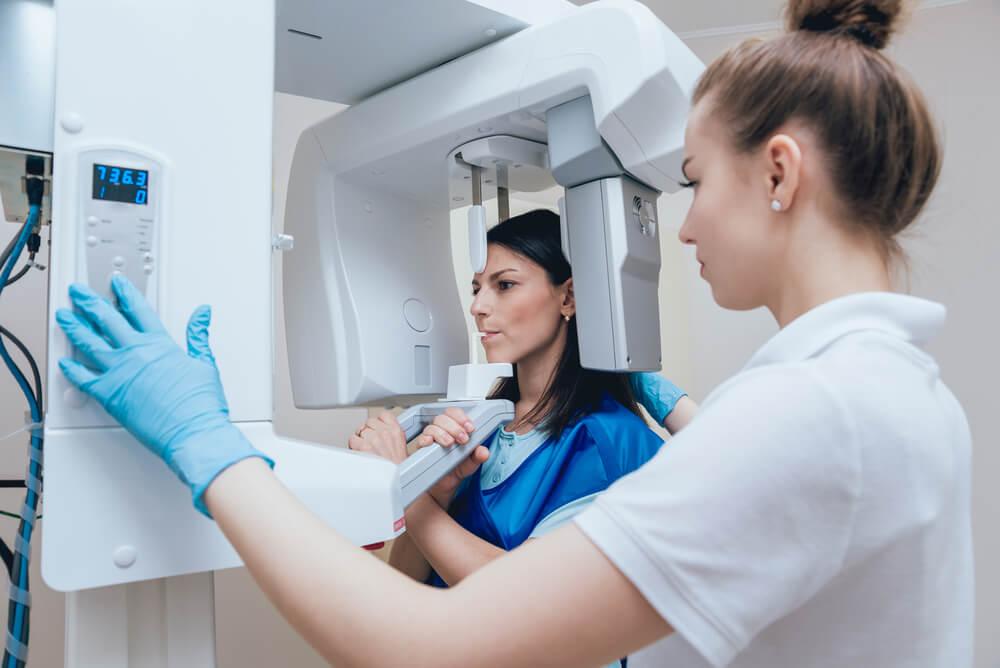
What did the examination show? Ask what the X-rays or other imaging show about your bone, and what that means for the plan. Our consultation checklist explains what a consultation should cover.
Our article on who should not have dental implants goes through the risk factors in more detail.
Questions about the treatment
- Do I need bone grafting or a sinus lift, and why? Some plans add a procedure to build up bone before or during implant placement. Ask what it involves, how long healing takes, what complications it can have, and what happens if you do not have it. A Cochrane review found it unclear which bone-building techniques are the most efficient9, and a sinus-lift review10 found no difference in implant loss between the patient's own bone and bone substitutes, so ask why this technique and material were chosen for you. Building bone up in height has frequent complications9, and for a lower jaw that has lost bone height the same Cochrane review found that short implants appear to be a better option. Our bone grafting page explains the options.
- When will the implant go in? If a tooth still has to come out, the implant may be placed on the same day or after the socket has healed. Implants placed into a fresh extraction socket had 95.2 per cent survival, against 98.4 per cent in healed bone11. Ask why the timing proposed suits you.
- When will the tooth go on? Some plans fit a temporary tooth soon after surgery (immediate loading); others wait for healing. In selected patients immediate loading can work well, but the findings are mixed: one review of 39 trials reported slightly lower implant survival with it12. Ask whether you are suitable, and why.
- What complications matter at this site? Ask about the risks of your own surgery: for example infection and bleeding, the nerve in the lower jaw, or the sinus in the upper jaw, depending on where the implant goes.
- Will I have sedation, and what does it need? If you are offered sedation other than nitrous oxide, you need an escort to take you home13 under the UK sedation standard, and you should get instructions on eating and drinking beforehand and written instructions for afterwards. Our sedation page explains it.
- Who does each step? Ask who places the implant and who makes and fits the crown. You have the right to know the names, roles and titles14 of the people who treat you. Implantology is not one of the nine dental specialties in Turkish law, and the rules forbid specialist titles based on certificates, under any name15. So ask about training and how often the dentist places implants, rather than relying on a title. Our article on dental titles explains them.
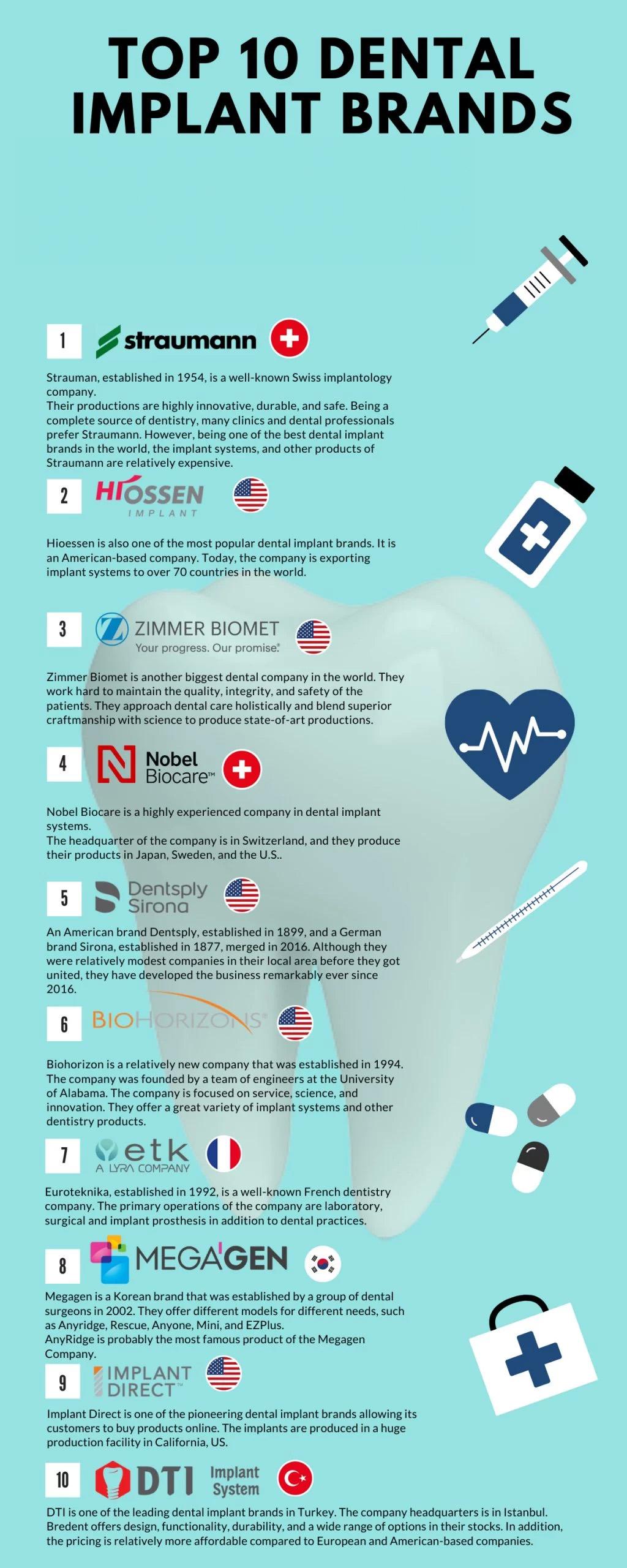
- Which implant will I get, and will I have a record of it? Ask for the implant system and the parts used, in writing. It matters for repairs years later. Our article on choosing an implant system explains why.
Before surgery you are owed an explanation of the options, risks and possible complications, and a consent form of which you keep a copy16.
Questions about the figures you are shown
Clinics and adverts often quote success rates. Ask what a figure measures and where it comes from.
- Staying in place is not the same as trouble-free. In pooled studies, about 97 in 100 single implants were still in place after five years and about 95 in 100 after ten. The crowns on them were replaced more often1: about 96 in 100 were still in use at five years and about 89 at ten. Over five years, screws loosened on 8.8 in 100 implants1 and crowns came off on 4.1.
- A published rate is not a clinic's result. Such figures are averages1 from studies in different countries, patient groups and years. Ask whether a rate is per implant, per crown or per patient, how it was defined and over how many years.
- "For life" is not a figure. The reviews quoted here report figures up to ten years and give no pooled figures beyond that; no figure can promise that an implant will last for life. Our article on how long implants last has the details.
Questions about afterwards
- What follow-up is planned? When the crown is fitted, an X-ray and gum measurements should be taken as a baseline17, so that later changes around the implant can be seen. Ask how often you will be reviewed and who will do it, and ask to be shown how to clean around the implant at home. Inflammation with bone loss around an implant (peri-implantitis) was found in about 20 in 100 patients18 in a 57-study review; the figure depends on how it is defined. Regular reviews are where it can be found early.
- Who deals with problems, and on what terms? Ask who fixes a loose screw, a broken or loose crown, or inflamed gum around the implant, and on what written terms. A warranty is a term of your agreement with the clinic, so ask for it in writing and read what it covers and what it asks of you, such as check-ups. It is separate from your rights under the law. If consumer law applies to your treatment, which is a legal question, claims for a defective service become time-barred two years after the service19, unless a longer period applies or the defect was concealed by gross fault or fraud.
- Will I get my records? You can take a copy of your file and records14. Ask for your X-rays, the treatment record and the implant details, so that any dentist can help later.
For licences, the information you are owed and where to complain, see our article on choosing a dental clinic.
Reasons to slow down
- You are asked to decide or pay on the day, before your questions are answered.
- A plan is fixed from photographs alone, without an examination and imaging.
- Smoking, gum disease, grinding or your medicines are not asked about.
- A success rate is quoted without saying what it measures.
- "Lifetime" promises, but nothing in writing about who fixes what.
None of these proves a clinic is wrong. Each is a reason to ask more and, if you are unsure, to get a second opinion.
When to see a dentist
Before treatment, a dentist's examination is where these questions get answered. After implant surgery, contact your dentist if you notice:
- pain or swelling that gets worse after the first few days instead of better
- bleeding that does not stop with pressure
- numbness of the lip, chin or tongue that lasts after the anaesthetic should have worn off
- an implant, crown or screw that feels loose
- bleeding, swelling or pus around an implant, at any time later
Emergencies. Difficulty breathing or swallowing, rapidly spreading swelling of the face or neck, or a high fever are serious signs. Go to the nearest emergency department or call 112.
Ask us these questions
Send us your questions, or an implant plan you were given elsewhere. Our dentists will go through it with you, including the options besides an implant.
Frequently asked questions
Which is better if I grind my teeth?
Neither is safe from grinding: veneers may not be suitable if you clench or grind. Your dentist assesses the bite first and may advise a night guard. Limited data suggest it may reduce fractures of porcelain veneers; for composite this is uncertain.
Can I change the colour of my veneers later?
No. A veneer's colour cannot be changed once it is bonded, and whitening does not lighten it. If you want whiter natural teeth, say so before the shade is chosen.
Can I have implants if I smoke?
Often yes, but the risk is higher, and it rises with the number of cigarettes a day. Tell your dentist how much you smoke, and ask what it means for your plan and aftercare.
Can composite veneers be done in one visit?
Direct composite veneers, built up on the tooth, can often be done in one visit. Composite veneers made in a laboratory need a second visit to bond them.
Should I get a written treatment plan?
Yes, ask for one. In the UK, dentists must give a written plan with the proposed treatment and a realistic indication of the cost before treatment starts, and update it in writing if it changes.
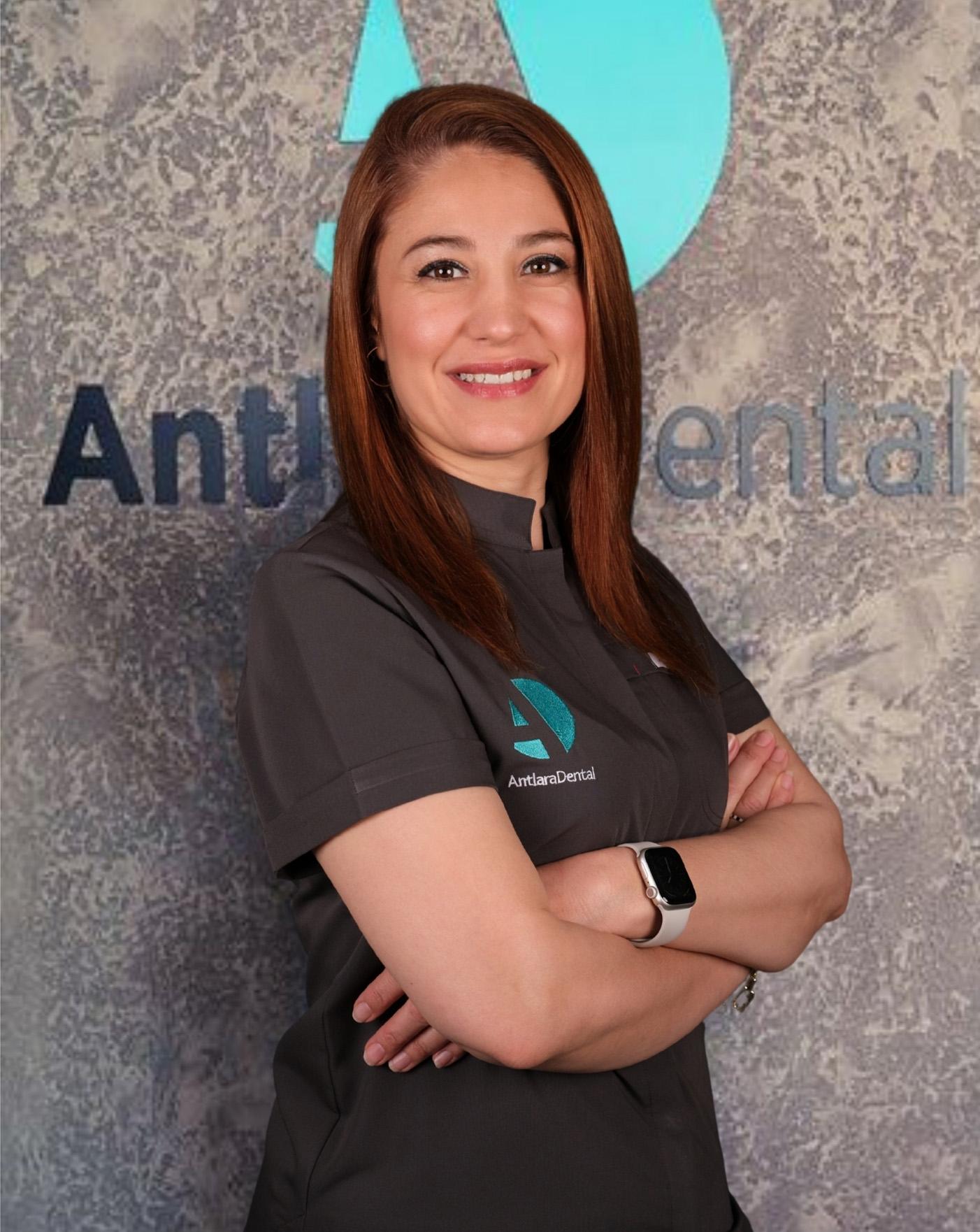
Dt. Dilek AKSU GÜLER
Dentist · Founder
She has completed advanced training in implantology and works in aesthetic restorations and smile design.
Sources
- Systematic review of the survival rate and the incidence of biological, technical and aesthetic complications of single crowns on implants (46 studies, mean follow-up 5 years). Clinical Oral Implants Research 2012;23 Suppl 6:2-21. 2012.↩doi.org
- Levels of smoking and dental implants failure: systematic review and meta-analysis (23 articles). Journal of Clinical Periodontology 2020;47(4):518-528. 2020.↩doi.org
- Effectiveness of implant therapy in patients with and without a history of periodontitis: systematic review with meta-analysis of prospective cohort studies (14 studies, >=36 months). Journal of Periodontal Research 2025;60(6):524-543. 2025.↩doi.org
- Bruxism and dental implants: systematic review and meta-analysis (27 studies; 2,105 implants in probable bruxers, 10,264 in non-bruxers). Journal of Oral Rehabilitation 2024;51(1):202-217. 2024.↩doi.org
- Impact of hyperglycemia on the rate of implant failure and peri-implant parameters in patients with type 2 diabetes mellitus: systematic review and meta-analysis (9 studies). Journal of the American Dental Association 2021;152(3):189-201. 2021.↩doi.org
- The impact of diabetes on dental implant failure: a systematic review and meta-analysis. International Journal of Oral and Maxillofacial Surgery 2016;45(10):1237-1245. 2016.↩doi.org
- Diabetes mellitus and dental implants: systematic review and meta-analysis (89 publications; 5,510 implants in diabetic and 62,780 in non-diabetic patients). Materials 2022;15(9):3227. 2022.↩doi.org
- Effects of bisphosphonates and denosumab on dental implants: systematic review with meta-analysis (21 studies, ROBINS-I, GRADE). Oral Diseases 2025;31(10):2835-2847. 2025.↩doi.org
- Interventions for replacing missing teeth: horizontal and vertical bone augmentation techniques for dental implant treatment (Cochrane review, 13 RCTs). Cochrane Database of Systematic Reviews 2009;(4):CD003607. 2009.↩doi.org
- Long-term effectiveness of maxillary sinus floor augmentation: systematic review and meta-analysis (11 prospective studies, follow-up at least 5 years). Journal of Clinical Periodontology 2019;46 Suppl 21:307-318. 2019.↩doi.org
- Immediate implant placement into fresh extraction sockets versus delayed implants into healed sockets: systematic review and meta-analysis. International Journal of Oral and Maxillofacial Surgery 2017;46(9):1162-1177. 2017.↩doi.org
- Immediate versus early or conventional loading dental implants with fixed prostheses: systematic review and meta-analysis of randomized controlled trials (39 RCTs). Journal of Prosthetic Dentistry 2019;122(6):516-536. 2019.↩doi.org
- Standards for Conscious Sedation in the Provision of Dental Care (V1.1). Intercollegiate Advisory Committee for Sedation in Dentistry, Dental Faculties of the Royal Colleges of Surgeons and the Royal College of Anaesthetists, 2020. 2020.↩saad.org.uk
- Hasta Hakları Yönetmeliği (consolidated text). T.C. Sağlık Bakanlığı; Resmî Gazete 1/8/1998 No 23420, amended RG 8/5/2014-28994, 23/12/2016-29927, 16/1/2019-30657. 1998.↩mevzuat.gov.tr
- Sağlık Hizmetlerinde Tanıtım ve Bilgilendirme Faaliyetleri Hakkında Yönetmelik. T.C. Sağlık Bakanlığı; RG 12/11/2025 No 33075. 2025.↩resmigazete.gov.tr
- Ağız ve Diş Sağlığı Hizmeti Sunulan Özel Sağlık Kuruluşları Hakkında Yönetmelik (consolidated text). T.C. Sağlık Bakanlığı; Resmî Gazete 6/10/2022 No 31975, amended RG 5/3/2024-32480 and 15/12/2024-32753. 2022.↩mevzuat.gov.tr
- Peri-implant diseases and conditions: consensus report of workgroup 4 of the 2017 World Workshop on the Classification of Periodontal and Peri-Implant Diseases and Conditions. Journal of Clinical Periodontology 2018;45 Suppl 20:S286-S291. 2018.↩doi.org
- What is the prevalence of peri-implantitis? A systematic review and meta-analysis (57 articles, 2005-2021). BMC Oral Health 2022;22(1):449. 2022.↩doi.org
- Tüketicinin Korunması Hakkında Kanun, Law No. 6502 (consolidated text). Resmî Gazete 28/11/2013 No 28835; consolidated PDF, mevzuat.gov.tr. 2013.↩mevzuat.gov.tr