
What is a composite veneer?
A composite veneer is a layer of tooth-coloured resin (composite) bonded to the front of a tooth. In the usual, direct method the dentist builds it up and shapes it on the tooth, often in one visit. In the indirect method it is made in a laboratory and bonded later. It can change the colour or shape of a front tooth, close small gaps and rebuild chipped or worn edges.
Composite has a trade-off. Compared with porcelain, it may need less enamel removed and is easier to repair, but it resists stains and wear less well1. It is still not a reversible treatment1: the tooth surface is prepared so that the resin bonds. Whether composite suits you depends on your teeth, your bite and how much change you want.
- A composite veneer is tooth-coloured resin bonded to the front of a tooth, usually built up and shaped in the chair.
- Compared with porcelain, composite may need less enamel removed and is easier to repair, but it stains and wears more easily.
- In pooled trials whose average follow-up ranged from about 2 to 8 years, about 88 in 100 composite veneers were still in place; no study gives a reliable number of years for one person.
- Clenching, grinding, gum disease and untreated decay are assessed first; for some people veneers are not suitable.

How a composite veneer is made
A direct composite veneer can be done in one visit, and a small amount of the tooth may need to be trimmed2; sometimes none is. Even then the enamel surface is treated so that the resin can bond, so the treatment is not simply undone later. The usual steps are below.
An indirect composite veneer is shaped in a laboratory from an impression or scan and bonded at a second visit.
- Examination: The dentist checks the teeth, gums and bite; decay and gum disease are treated first.
- Choosing the colour: The shade is chosen with you before any work starts, because it cannot be changed after bonding.
- Preparing the surface: The tooth is cleaned, trimmed only where needed, and treated so that the resin bonds.
- Building up the veneer: Composite is applied in layers and hardened, then shaped to the planned outline.
- Finishing: The surface is polished and the bite is checked and adjusted.
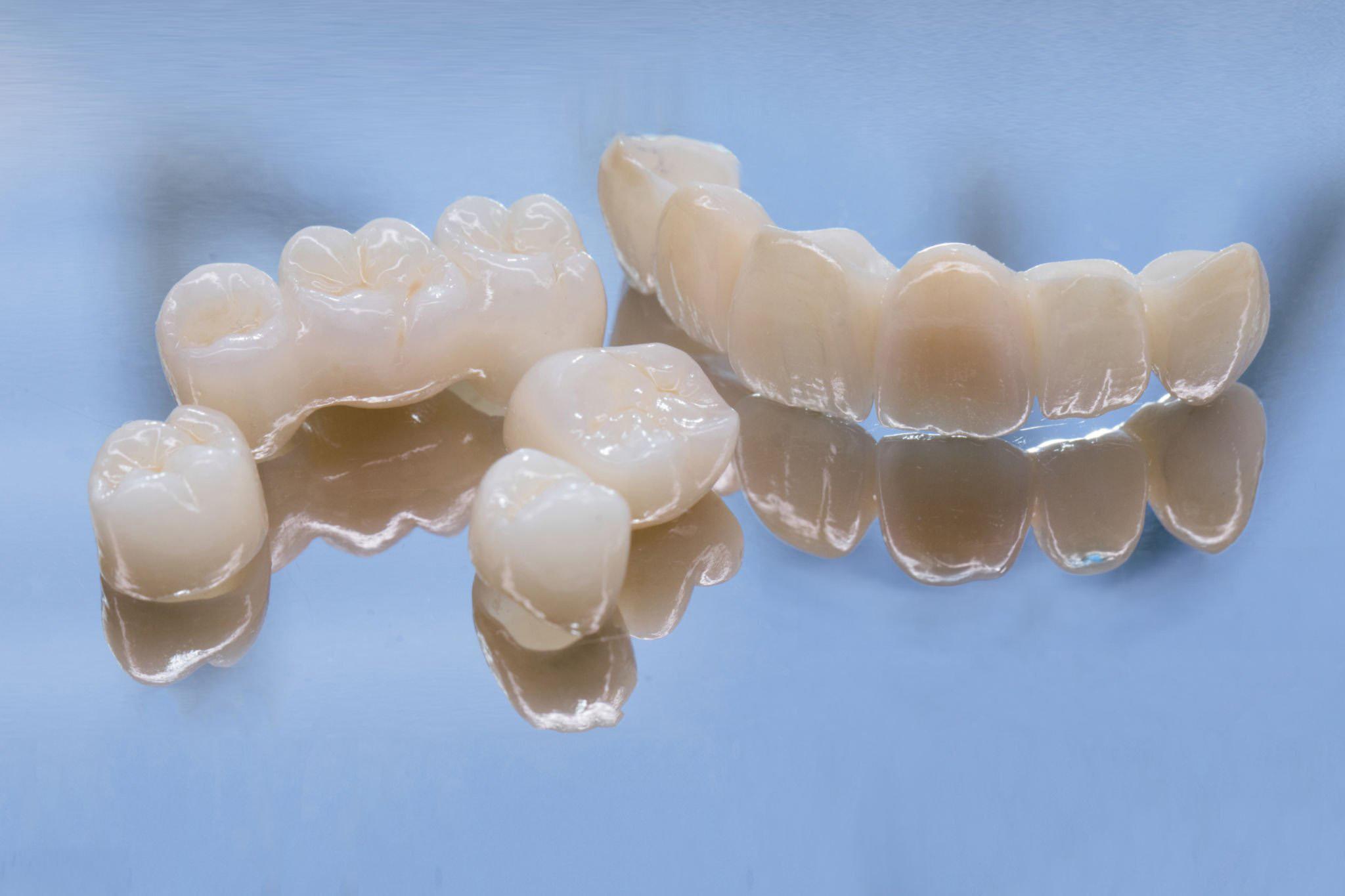
Who composite veneers may and may not suit
They may suit
- A worn or uneven edge, or a slight difference in shape or length. A small chip may need only a small composite repair rather than a veneer
- Small gaps between front teeth: in a two-year trial in selected patients with several gaps, there was no significant difference in two-year survival between composite and ceramic veneers, but composite edges discoloured more often3
- Worn front teeth, where composite repairs are used but patients should expect monitoring, repair or replacement over time4; the dentist also looks for the cause of the wear
- Discolouration that whitening has not improved
Something else may come first
- Healthy tooth, only the look bothers you: doing nothing is also an option.
- Colour only: whitening, if it suits the cause of the discolouration.
- Crowded teeth: orthodontic treatment is assessed first, because shaping crowded teeth straight with veneers takes more tooth.
- Decay or gum disease: treated before any veneer1.
Veneers may not suit
Veneers may not be suitable if you clench or grind your teeth, or if you have gum disease2. The two-year trial above excluded people who grind their teeth, so its results do not apply to them.
A root-filled tooth can have a composite veneer, but the risk is higher. In a dental-school clinic, 196 direct composite veneers in 86 patients were followed for 3.5 years on average. The yearly failure rate was 4.9% on teeth with a living nerve and 9.8% on root-filled teeth5. That does not make a root-filled tooth unsuitable; it is something to weigh.
How long do composite veneers last?
No study gives a reliable number of years for your own veneers. The figures below describe groups of veneers in particular studies.
- Pooled trials. A 2023 review combined 7 studies of composite veneers. Pooling the randomised trials among them, about 88 in 100 veneers (somewhere between 81 and 94) were still in place6; the average follow-up of the studies ranged from about 2 to 8 years. The problems reported most often were a rough surface, colour mismatch and staining at the edge; most were judged acceptable by the examining dentists, some only after further treatment. In that review, veneers built up on the tooth survived better than laboratory-made ones6.
- Two years, selected patients with gaps. In a double-blind trial of 120 veneers in 28 patients, about 93 in 100 composite and 95 in 100 ceramic veneers3 met the survival criteria; the difference was not significant, and composite edges discoloured more often. People who grind their teeth were excluded.
- Ten years, one practice. In a study that was not randomised, composite veneers needed repair or replacement more often than ceramic ones7.
The studies lean towards ceramic: the ten-year study favoured it, while the two-year trial found no significant difference. Because the longer study was not randomised, it does not prove that porcelain lasts longer in every patient, and nothing shows that the two have equal lifespans. What the studies do agree on is that composite needs looking after, and that a repair or a replacement at some point is part of the plan. How composite and porcelain compare is covered in composite or porcelain veneers.
How composite veneers fail
Any veneer, composite or porcelain, can chip, crack, wear down or come loose over time, and may need to be re-bonded, repaired or replaced1. In a review of 17 studies of composite restorations on front teeth, not only veneers, fracture of the tooth or the restoration was the most common reason for failure8. When the restorations were made for appearance, failures because of colour, shape or surface staining were more common.
Other changes:
- Sensitivity. Teeth can become more sensitive because some enamel is removed2.
- Staining and dulling. Coffee, tea, red wine and smoking stain composite more easily than porcelain, and the surface can lose its polish.
- A colour difference. The colour of a veneer cannot be changed after it is bonded, and your natural teeth may change colour over time2, so they may stop matching.
- Chips at the edge. Small chips may be repaired; sometimes a new veneer is needed9.
Repair is one of composite's advantages, but it is not guaranteed to be as good as new. For defective fillings, studies comparing repair with replacement found no clear difference10, but there were only 3 studies and the certainty of the evidence was very low; they did not look at veneers.
Looking after composite veneers
- Brush twice a day with fluoride toothpaste and clean between your teeth every day. A veneer does not protect the tooth from decay, and new decay can start at its edge.
- Do not bite nails, pens, ice or other hard objects with your front teeth.
- If your dentist gives you a night guard for clenching or grinding, wear it.
- Keep to your check-ups: good daily cleaning and regular check-ups help veneers last longer9. A small chip or a stained edge is easier to deal with early.
- Whitening will not lighten the veneers. If you whiten your natural teeth later, the veneers may look darker next to them.
When to see a dentist
Contact your dentist if any of these happens.
- A veneer chips, cracks, feels rough or catches at the edge
- A veneer comes off: keep it, and do not glue it back yourself
- Sensitivity that lasts more than a few weeks or keeps getting worse
- Pain that starts on its own or wakes you at night
- Bleeding, swelling or a dark line at the gum edge of a veneer
- Your bite feels high after treatment
Emergencies. Throbbing pain, facial swelling or a fever: see a dentist without waiting. Difficulty breathing or swallowing, or swelling in the mouth or neck that spreads quickly: go to an emergency department or call 112.
Not sure composite is right for your teeth?
Send a photo of your teeth and tell us what bothers you. Our dentists will write back with the options, starting from the one that removes the least.
Frequently asked questions
Can composite veneers be whitened?
No. Whitening lightens natural teeth, not resin or ceramic, and the colour of a veneer cannot be changed after it is bonded. If your natural teeth change colour later, the veneers may stop matching them.
Can composite veneers be done in one visit?
Direct composite veneers, built up on the tooth, can often be done in one visit. Composite veneers made in a laboratory need a second visit to bond them.
Can a chipped composite veneer be repaired?
Composite is easier to repair than porcelain, and small chips may be repaired. Sometimes a new veneer is needed. Keep any piece that comes off and see your dentist.
Do composite veneers damage the teeth?
They may need less enamel removed than porcelain veneers, but the surface is still prepared so the resin bonds, and no source shows the treatment is fully reversible. Decay can still start at the edge, so daily cleaning matters.
Can I have composite veneers if I grind my teeth?
Veneers may not be suitable if you clench or grind your teeth. Your dentist assesses your bite first and may advise a night guard. Whether it protects a composite veneer from fracture is not certain.
Sources
- Veneers. American Dental Association, MouthHealthy.↩mouthhealthy.org
- Veneers. healthdirect Australia (government-funded health information), last reviewed February 2025. 2025.↩healthdirect.gov.au
- Direct composite versus pressed lithium disilicate veneers for multiple diastema closure: double-blind randomised controlled trial, 2 years. Materials 2024;17(14):3514. 2024.↩pmc.ncbi.nlm.nih.gov
- Success and survival of composite resin restorations for the management of localized anterior tooth wear: a systematic review and meta-analysis. Eur J Prosthodont Restor Dent 2024;32(4):403-414. 2024.↩doi.org
- Direct anterior composite veneers in vital and non-vital teeth: a retrospective clinical evaluation. J Dent 2015;43(11):1330-6. 2015.↩doi.org
- Survival and complication rates of resin composite laminate veneers: a systematic review and meta-analysis. J Evid Based Dent Pract 2023;23(4):101911. 2023.↩doi.org
- 10-year practice-based evaluation of ceramic and direct composite veneers. Dent Mater 2022;38(5):898-906. 2022.↩doi.org
- Anterior composite restorations: a systematic review on long-term survival and reasons for failure. Dent Mater 2015;31(10):1214-24. 2015.↩doi.org
- Veneers (patient information). Oral Health Foundation (UK charity); published January 2017, updated April 2026. 2026.↩dentalhealth.org
- Risk of failure of repaired versus replaced defective direct restorations in permanent teeth: a systematic review and meta-analysis. Clin Oral Investig 2022;26(7):4917-4927. 2022.↩doi.org

Dt. Dilek AKSU GÜLER
Dentist · Founder
She has completed advanced training in implantology and works in aesthetic restorations and smile design.