
What is smile design?
Smile design is planning. The dentist looks at your face, lips, gums and teeth, asks what bothers you, and proposes what could change: colour, shape, length, gaps or alignment. The proposal may be shown as drawings on photographs, a digital simulation, or a trial version of the new shape placed over your teeth before any tooth is prepared.
The design itself changes nothing; the treatment that follows does. That treatment may be whitening, bonding, orthodontics, veneers or crowns, and some of it cannot be undone: enamel removed for a veneer does not grow back1. A careful design therefore starts from the least treatment that reaches your goal, and says which teeth need nothing at all.
- Smile design is a plan for how the teeth could look; the treatment that follows is what changes them.
- Veneers and crowns remove tooth that does not grow back, so a design should start from the least treatment that works.
- A picture or simulation is a proposal, not a promise of the finished result.
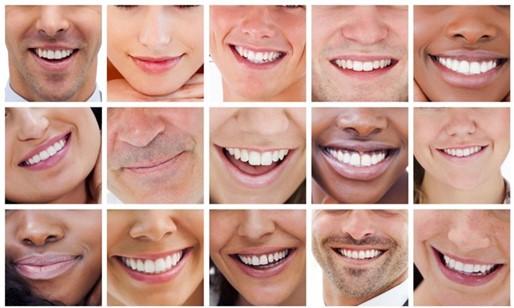

What a smile design can do
- Show you a proposal before anything is done. You can see the planned shape and colour, ask for changes, or decide not to go ahead.
- Separate the teeth that need treatment from those that do not. A design that treats every visible tooth the same way needs a reason for each tooth.
- Put treatments in order. Gum disease and decay come first. Crowded or crooked teeth are assessed for orthodontic treatment before anyone suggests covering them, because "straightening" teeth with veneers or crowns removes a lot of tooth. If you want your natural teeth whiter, that is discussed before the shade of any veneer or crown is chosen.
- Let you try the shape. Ask whether the proposed shape can be tried in your mouth, as a temporary mock-up, before any tooth is prepared. It shows the length and shape against your own lips and face better than a screen does.
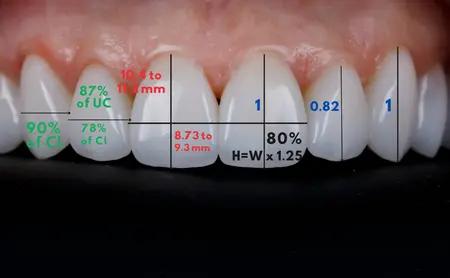
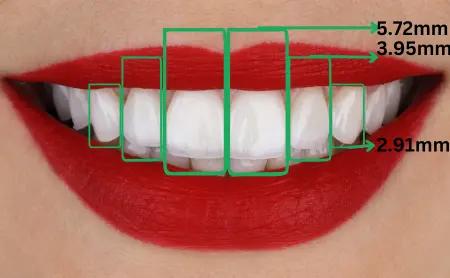

What a smile design cannot do
It cannot make the treatment reversible
A veneer usually needs a thin layer of enamel removed (in selected cases none), and a crown reduces the tooth on every surface. After veneers, teeth can become more sensitive because some enamel is removed2. In pooled studies of teeth that were alive before they received crowns, partial restorations or bridge supports, the nerve lost its vitality in about 5 in every 1003, over follow-up periods that varied; the certainty of this evidence is low, and the figure is not specific to veneers. Such a tooth then needs root canal treatment if it is to be kept. The more teeth a design covers, the more teeth carry these risks.
It cannot promise the finished result
A simulation is a proposal, not a guarantee: how closely the finished teeth match it depends on the system, the treatment and what is being predicted. Colour can be particularly hard to reproduce. Choosing a tooth shade by eye is subjective, and the available shade guides do not cover every natural tooth colour4. Teeth also look different under different light5, and a screen shows colour its own way.
It cannot change the colour later
A veneer's colour cannot be changed once it is bonded, and whitening does not change it2. Over time the natural teeth around it may change colour and stop matching. Whitening does not lighten crowns, veneers or fillings the way it lightens natural teeth6, so they can look darker next to whitened teeth.
It cannot make veneers last for ever
A review of 25 studies and 6,500 ceramic veneers estimated that about 95 in 100 were still in place at ten years7. That does not mean they were all free of problems, and the figure does not apply to composite veneers. Fracture and coming off were the main reasons for failure, and not every small chip means a veneer must be replaced. Clenching or grinding raises the risk of fracture, so veneers do not suit some patients; in a small retrospective study, among 30 patients with bruxism, those who wore a night guard had fewer fractures8. A guard may lower the risk; it does not remove it.
It cannot close gaps without trade-offs
Small gaps can be closed with bonding, veneers or orthodontics. In a two-year study of selected patients with several gaps, about 93 in 100 composite and 95 in 100 ceramic veneers survived9, counting some that chipped and were repaired; the difference was not significant, and the edges of composite discoloured more often. Gaps closed by orthodontics can open again: in a small study, the central gap between the two upper front teeth reopened in 60 per cent of patients, on average 5 to 6 years after retention stopped10, which is why long-term retention is advised.

The "Hollywood smile" and edited photos
"Hollywood smile" is a marketing phrase, not a treatment. It usually means veneers or crowns on many front teeth, often in a very light, even shade. The same questions apply to it as to any plan: why each tooth, how much is removed, and whether a gentler option would do. Where the phrase "Turkey teeth" comes in, and what to check before any crown or veneer, is explained in our "Turkey teeth" article.
Photos in adverts and on social media show selected results, often under studio light, and cannot show how much tooth was removed. Use them to describe what you like, not as a promise of how your teeth will look.
Smile design is not a dental specialty in Turkey11: it is not one of the dental specialties listed in the law, so "smile design specialist" is not a recognised title. Veneers and crowns are carried out by dentists.

Questions to ask about a smile design
- What changes on each tooth, and why? Ask for the plan tooth by tooth.
- What is the least I could do to reach my goal? That includes whitening, bonding, orthodontics or leaving some teeth as they are. See crowns or veneers.
- How much of each tooth will be removed, and could any tooth need root canal treatment?
- Can I try the shape in my mouth before any tooth is prepared?
- How will the shade be chosen, and under what light? Say if you want your natural teeth whiter. See how the shade of a crown or veneer is chosen.
- Have you assessed my bite, including a deep bite, and does clenching or grinding change the plan?
- What happens if a veneer breaks or comes off, or if I do not like the result? Ask for the terms in writing.
Veneers and crowns do not protect teeth from decay, which can start at their edges. Brush twice a day with fluoride toothpaste, clean between your teeth daily, avoid biting hard objects with your front teeth and keep your check-ups; a repair or replacement later is part of the commitment.
A second opinion is normal before treatment on healthy teeth. How long veneers last, and what affects it, is covered in how long veneers last.
When to see a dentist
Before any cosmetic plan, see a dentist about problems that come first:
- bleeding or receding gums, or a tooth that has become loose
- a tooth that hurts, or sensitivity that lasts
- a broken tooth, or a filling, crown or veneer that has come off (keep it, and do not glue it back yourself)
- after treatment: sensitivity that lasts more than a week or gets worse, pain when you bite, or a bite that feels high
Emergencies. Throbbing pain, facial swelling or a fever: see a dentist without waiting. Difficulty breathing or swallowing, fast-spreading swelling in the mouth or neck, or swelling around the eye: go to an emergency department or call 112.
Ask us about a smile design
Send us a photo of your smile and tell us what you would like to change, or send a design you were shown. Our dentists will answer with the options, starting from the one that removes the least.
Frequently asked questions
Is smile design a treatment?
No. It is a plan for how the teeth could look. The treatment that follows, such as whitening, bonding, orthodontics, veneers or crowns, is what changes the teeth, and some of it cannot be undone.
Will my teeth look exactly like the simulation?
Not necessarily. A simulation is a proposal. Colour in particular is hard to match, and light and screens change how it looks. Trying the shape in your mouth before any tooth is prepared shows more than a screen.
Does a smile design always mean veneers?
No. Depending on the teeth, the plan may be whitening, bonding, orthodontic treatment, veneers or crowns, or a mix. Some teeth may need nothing. Ask why each tooth gets what the plan proposes.
Is a "smile design specialist" a real title?
Not in Turkey. Smile design is not among the dental specialties set by law. Ask about the dentist's training and experience instead of a title.
Can I change the colour of my veneers later?
No. A veneer's colour cannot be changed once it is bonded, and whitening does not lighten it. If you want whiter natural teeth, say so before the shade is chosen.
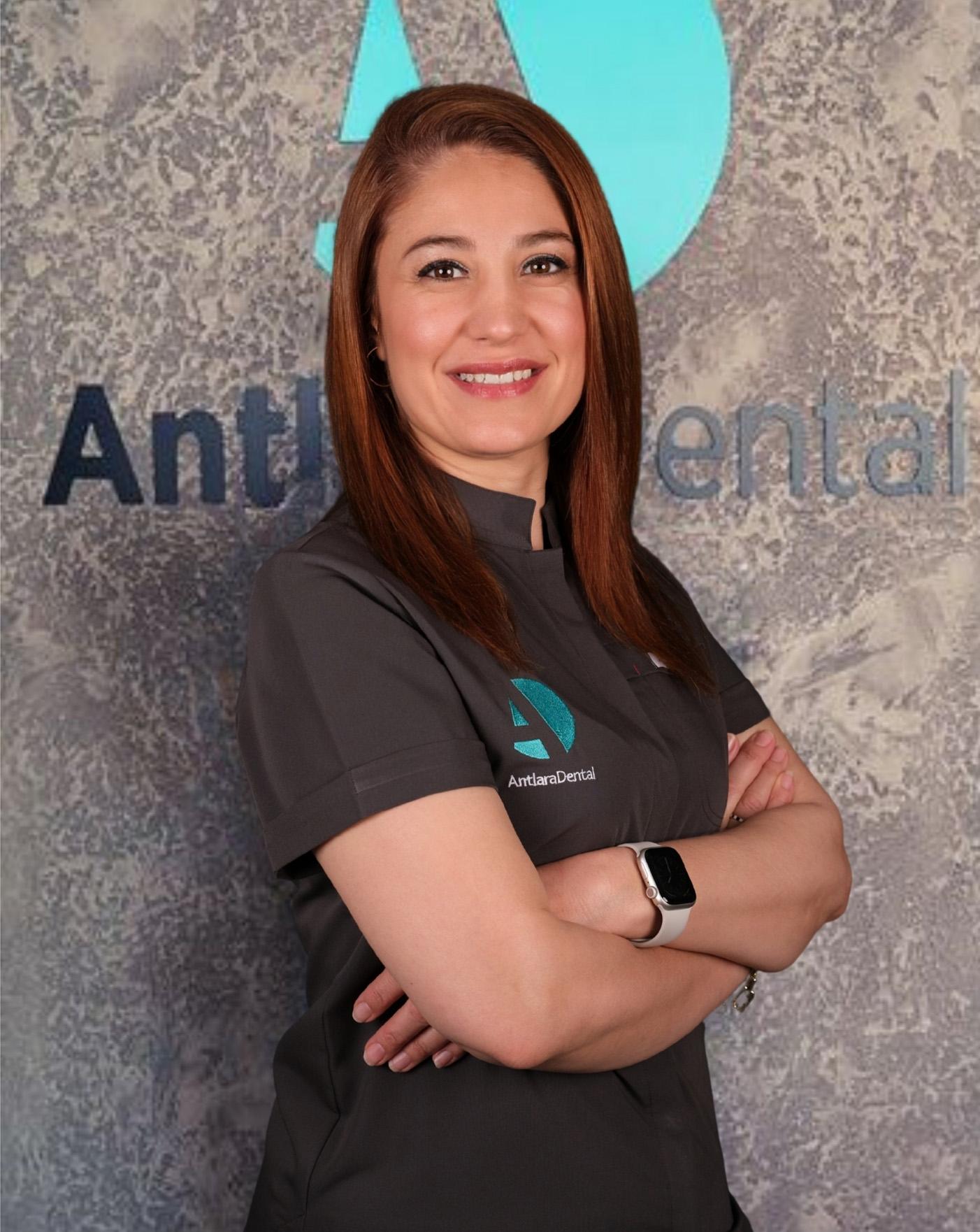
Dt. Dilek AKSU GÜLER
Dentist · Founder
She has completed advanced training in implantology and works in aesthetic restorations and smile design.
Sources
- Veneers. American Dental Association, MouthHealthy.↩mouthhealthy.org
- Veneers. healthdirect Australia (government-funded health information), last reviewed February 2025. 2025.↩healthdirect.gov.au
- Incidence of pulp necrosis and periapical pathosis after indirect restorations: systematic review and meta-analysis (37 studies, 11,615 teeth). BMC Oral Health 2023. 2023.↩pmc.ncbi.nlm.nih.gov
- A clinician's perspective on the accuracy of the shade determination of dental ceramics: a systematic review. J Pers Med 2024;14(3):252. 2024.↩doi.org
- Shade matching performance of normal and color vision-deficient dental professionals with standard daylight and tungsten illuminants. J Prosthet Dent 2010;103(3):139-47. 2010.↩doi.org
- Teeth Whitening (patient information). American Dental Association, MouthHealthy.↩mouthhealthy.org
- Survival and failure causes of ceramic laminate veneers: systematic review (25 studies, 6,500 veneers, 3-21 years). Journal of Clinical Medicine 2021;10(5):1074. 2021.↩pmc.ncbi.nlm.nih.gov
- Porcelain veneers in patients with bruxism: 323 veneers in 70 patients, 3-11 years. Medicina Oral Patologia Oral y Cirugia Bucal 2014. 2014.↩pmc.ncbi.nlm.nih.gov
- Direct composite versus pressed lithium disilicate veneers for multiple diastema closure: double-blind randomised controlled trial, 2 years. Materials 2024;17(14):3514. 2024.↩pmc.ncbi.nlm.nih.gov
- Stability of orthodontic midline diastema closure: 30 patients, mean 5.6 years after retention. Journal of Applied Oral Science 2014. 2014.↩pmc.ncbi.nlm.nih.gov
- 1219 sayılı Tababet ve Şuabatı San'atlarının Tarzı İcrasına Dair Kanun (consolidated text). T.B.M.M.; RG 14/4/1928 No 863; consolidated on mevzuat.gov.tr. 1928.↩mevzuat.gov.tr