
Extra teeth and teeth that have not come in: the short answer
An extra (supernumerary) tooth is one that forms in addition to the usual set. Many cause no trouble, but some stop an adult tooth from coming in. Usually the extra tooth is removed and space is made. If the adult tooth still does not come in, it can be uncovered in a small operation and pulled into place with braces.
- Extra teeth are often found only on an X-ray, and some never cause a problem.
- The most common problem is an adult tooth next to the extra one coming in late.
- Cleidocranial dysplasia is a rare genetic condition in which many extra teeth and adult teeth that do not come in on their own are typical.
- Uncovering a tooth and guiding it with braces takes planning between a dentist, an orthodontist and a surgeon.
How many teeth should there be?
An adult usually has 32 permanent teeth, including four wisdom teeth. The American Dental Association notes that all 32 have usually come in by the age of 211. Not everyone has all 32, and not everyone has only 32.
Some people have fewer. Leaving wisdom teeth aside, a review of many studies found at least one adult tooth that never formed in about 6 in 100 people2. This is called hypodontia.
Extra teeth are the opposite: a tooth that forms in addition to the usual set. A meta-analysis of 14 prevalence studies found figures between 0 and 3 in 100 people3. In people of European origin the average was about 1.6 in 100. Males were affected more often than females. The figure depends on how people were examined: studies that also used X-rays found more than those that relied on looking in the mouth.
A review of the research reported that extra teeth are more common in the upper jaw than the lower4. They can be shaped like a normal tooth or be small and cone-shaped. Some are found by chance on an X-ray taken for another reason.
What problems can extra teeth cause?
Many extra teeth cause no problem at all. When they do, the same review found that the most common one is an adult tooth next to it coming in late4. Other problems it lists are:
- an adult tooth that stays in the bone (an impacted tooth)
- a tooth that comes in out of place, or is pushed sideways or twisted
- crowding, or a gap between the front teeth
- a fluid-filled sac (cyst) forming around the extra tooth
The upper front teeth usually come in during the early years of mixed baby and adult teeth5. A British guideline on upper front teeth that have not come in says the cause is often local, in the mouth itself. An extra tooth is one such cause.
Cleidocranial dysplasia: extra teeth in a wider condition
Extra teeth are sometimes part of a wider condition. Cleidocranial dysplasia is one of them. It is a rare genetic condition that affects how the bones and teeth develop. It occurs in about 1 in a million people worldwide6 and is usually caused by a change in a gene called RUNX2. A parent with the condition can pass it to a child.
Typical signs in the mouth are baby teeth that stay for a long time, adult teeth that come in late, and many extra teeth. Other signs include short or missing collarbones and a soft spot on the skull that closes late6.
In 2026, 13 experts published consensus recommendations7 for the condition. They note that in cleidocranial dysplasia the baby teeth rarely fall out and the adult teeth rarely come in without help. Assessment and planning should therefore start early rather than waiting for the teeth to come in. The operations themselves are timed to how far the teeth have developed. The main points for the teeth are:
- an assessment by an orthodontist experienced in the condition by the age of 6
- close monitoring of tooth development with X-rays
- treatment timed by dental age, meaning how far the teeth have developed rather than the child's age in years; in this condition dental age typically runs about three years behind
- a phased approach: extra teeth and baby teeth are removed and adult teeth uncovered in stages, then braces guide them into place
The panel also says that implants, bridges or dentures can be considered for someone who cannot have, or does not want, this orthodontic treatment. These are expert opinions, not the results of trials. The panel notes that 'standard' orthodontic treatment for the condition is not well established.
A public example
The actor Gaten Matarazzo has said publicly that he has cleidocranial dysplasia. In January 2020 he wrote on Instagram about an operation that lasted four hours. According to his own post, the team removed 14 extra teeth and uncovered six of his adult teeth8. The post was also reported by NBC News9.
We mention him only because he made these details public himself. Naming him does not suggest any link between him and this clinic. His post does not show what treatment another person would need: that depends on an examination and X-rays.
How an adult tooth that has not come in is brought into place
The plan depends on the cause, the position of the tooth, how far its root has formed and the person's age. For upper front teeth in children, the British guideline sets out the general principles. They are to make enough space in the arch and remove whatever is blocking the tooth5. If needed, the tooth can then be uncovered surgically, with or without braces to pull it into place. The guideline recommends that a team of dental specialists work on the case together.
- Examination and X-rays. The dentist checks which teeth are present and which are still in the bone. X-rays show where the extra tooth and the adult tooth lie. A 3D scan is sometimes needed.
- Removing what is in the way. An extra tooth is usually removed. A review found no agreement on the best time to do this4. An extra tooth that causes no problem may instead be monitored. A baby tooth that has stayed too long may also be removed.
- Making space. If the gap has closed, a brace may be used to open it.
- Waiting, or uncovering the tooth. Sometimes the adult tooth comes in by itself once the way is clear. If it does not, the tissue covering it is opened under anaesthetic. In some plans, such as those for cleidocranial dysplasia, teeth are uncovered in the same operation that removes the extra teeth. The tooth may be left uncovered (open technique). Or a small attachment with a fine chain is bonded to it and the gum stitched back over it (closed technique).
- Guiding the tooth with braces. Gentle force from the braces, applied through the attachment, is used to guide the tooth into line over months.
Most of the research on uncovering teeth concerns upper canines that lie in the roof of the mouth. A Cochrane review of three small trials found that the open and closed techniques may be equally successful10 at exposing these teeth. The evidence was of low quality. The same review describes fixed braces for two to three years after the canine is uncovered.
What to be aware of
- It is surgery. Uncovering a tooth is an operation under anaesthetic, with the usual after-effects of oral surgery such as swelling and discomfort. In one trial in the Cochrane review, one person needed antibiotics for an infection and another had pain when the chain came through the gum.
- The attachment can come off. If it does, a further procedure may be needed.
- It takes time. Guiding a tooth into place takes many months. In the canine trials, braces were worn for two to three years after the tooth was uncovered. In cleidocranial dysplasia there are several operations over years.
- Not every tooth can be brought in. A tooth may be in a position or at a stage that makes guiding it unrealistic. Other options are then discussed, such as removing the tooth and filling the gap later.
- No figures for your case. We have found no pooled success rate for bringing teeth into place in cleidocranial dysplasia, so we do not give one.
When to see a dentist
Ask a dentist to check if you notice any of these, in a child or an adult:
- an adult tooth has come in on one side but not the matching tooth on the other side
- a baby tooth stays in place long after the others around it have fallen out
- an extra tooth is visible, or a tooth comes in behind or out of line with the others
- a new gap between the front teeth, or front teeth that are twisted or pushed aside
- a swelling in the gum or jaw over a tooth that has not come in
A child may have several of these, or other signs such as a soft spot on the head that stays open. If so, tell the dentist and the family doctor. An assessment by a doctor or geneticist may be advised.
Emergencies. Difficulty breathing or swallowing, rapidly spreading swelling of the face or neck, high fever or swelling around the eye are serious signs. Do not wait for a clinic's reply: go to the nearest emergency department or call 112.
Frequently asked questions
Do extra teeth always have to be removed?
No. An extra tooth that causes no problem and does not affect how the teeth work or look may be monitored with check-ups. It is usually removed when it blocks an adult tooth, pushes teeth out of line or causes another problem.
Does having an extra tooth mean my child has a genetic condition?
Not necessarily. Extra teeth were found in up to about 3 in 100 people, while cleidocranial dysplasia affects about 1 in a million. Many extra teeth together with adult teeth that do not come in can point to such a condition. A dentist can advise on further assessment.
Will the adult tooth come in once the extra tooth is removed?
Sometimes, once the way is clear and there is enough space. If it does not, the tooth can be uncovered surgically and guided into place with braces. The dentist decides using X-rays and the stage of the tooth's root.
Can adults have extra teeth or adult teeth that have not come in?
Yes. Some are only found on an X-ray taken in adulthood. Whether to leave, remove or bring in such a tooth depends on its position, the person's age and any problems it causes. The dentist decides after an examination and X-rays.
Is uncovering a tooth painful?
The area is numbed with an anaesthetic, and sedation may be added to help with anxiety; the dentist explains which suits you. Afterwards there may be swelling and soreness for a few days. Tell your dentist if pain increases after the third day or if you notice pus or fever.
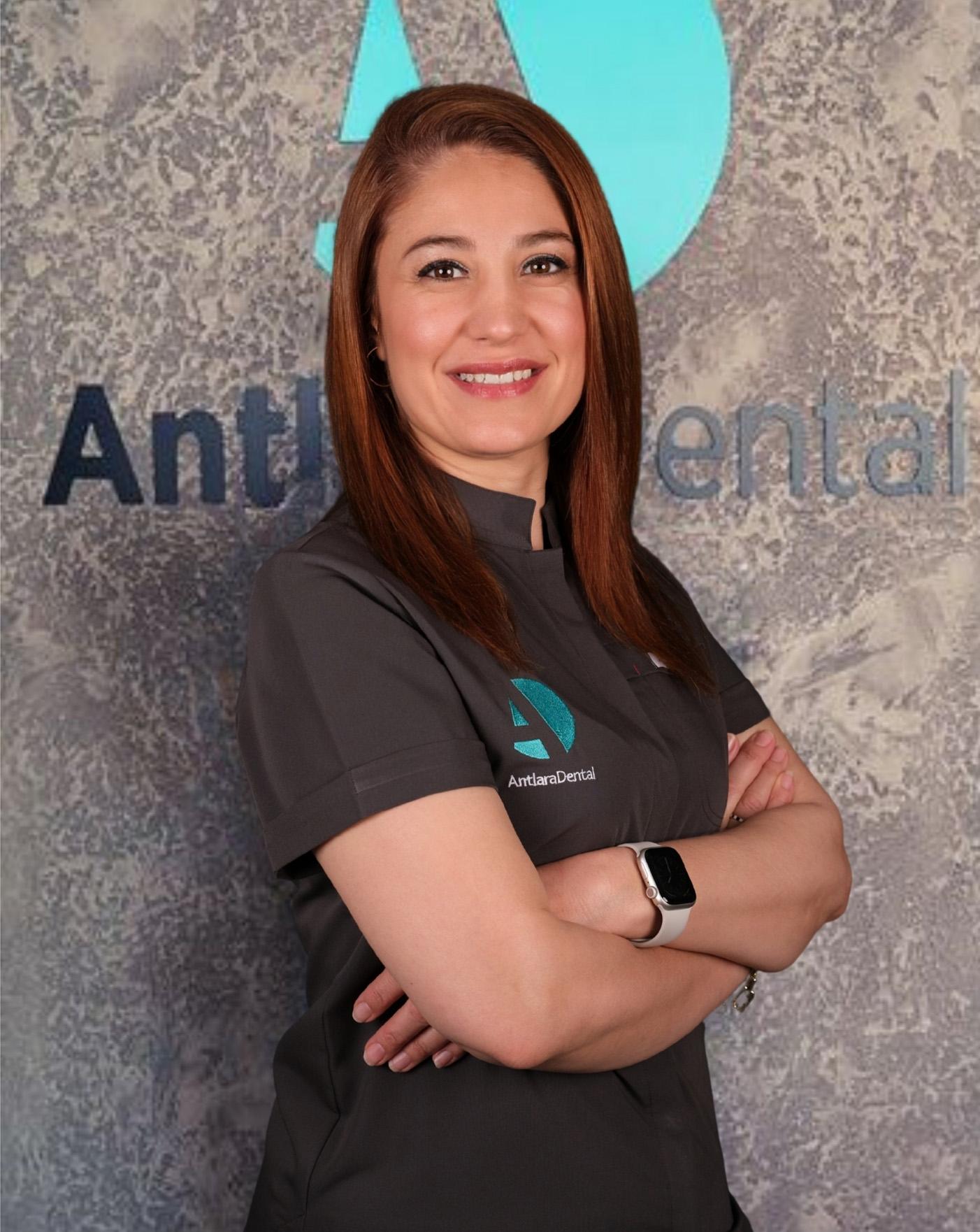
Dt. Dilek AKSU GÜLER
Dentist · Founder
She has completed advanced training in implantology and works in aesthetic restorations and smile design.
Sources
- Eruption charts. American Dental Association, MouthHealthy.↩mouthhealthy.org
- Prevalence of hypodontia and associated factors: a systematic review and meta-analysis. Journal of Orthodontics 2014;41(4):299-316. 2014.↩doi.org
- Diagnostic tools used to predict the prevalence of supernumerary teeth: a meta-analysis. Dentomaxillofacial Radiology 2012;41(6):444-449. 2012.↩doi.org
- Prevalence, etiology, diagnosis, treatment and complications of supernumerary teeth. Journal of Clinical and Experimental Dentistry 2014;6(4):e414-e418. 2014.↩doi.org
- National clinical guidelines for the management of unerupted maxillary incisors in children. British Dental Journal 2018;224(10):779-785 (British Orthodontic Society / Faculty of Dental Surgery, Royal College of Surgeons of England). 2018.↩doi.org
- Cleidocranial dysplasia (MedlinePlus Genetics). US National Library of Medicine, MedlinePlus Genetics.↩medlineplus.gov
- Diagnosis, treatment, and management recommendations for cleidocranial dysplasia: a modified Delphi panel. Journal of Bone and Mineral Research 2026;41(9):972-987. 2026.↩doi.org
- Stranger Things' Gaten Matarazzo Undergoing 'Big' Surgery No. 4 for Cleidocranial Dysplasia. E! Online, 31 January 2020 (Emily Belfiore). 2020.↩eonline.com
- 'Stranger Things' star Gaten Matarazzo says surgery to remove extra teeth was a success. NBC News, 1 February 2020 (Minyvonne Burke). 2020.↩nbcnews.com
- Open versus closed surgical exposure of canine teeth that are displaced in the roof of the mouth (Cochrane review). Cochrane Database of Systematic Reviews 2017, CD006966.pub3. 2017.↩doi.org